Message Node
Updated
Overview
The Message node is used to automate chatbot responses to users by retrieving and delivering pre-defined messages. It enables quick, consistent replies, helping streamline conversations and improve response time.
Steps to Add a Message Node
On the Journey Builder window, click the Plus icon and add a Message node. You will see two options for adding a Message node - Text and Chat Templates.
For Text:
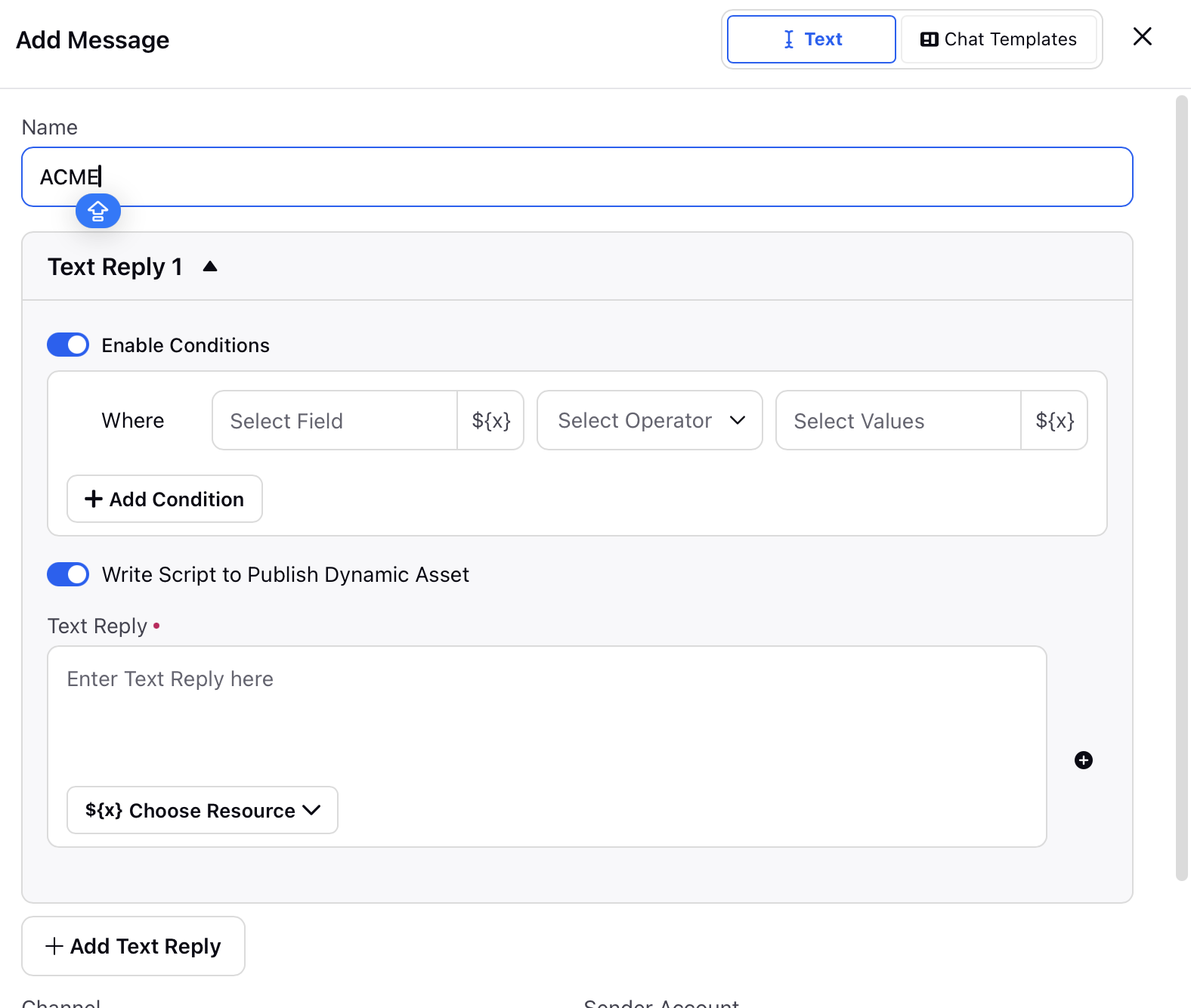
1. On the Add Message window, enter a Name and Text Reply. You could also add another message by clicking Add Text Reply.
2. Additionally, you can Enable Conditions to add conditions to each of your responses, so that a specific reply is given when a particular condition is met.
3. Toggle on Write Script to Publish Dynamic Asset for publishing a code, as the field will read the response as a code, not as a text or string.
4. Select the Channel and Sender Account.
5. Enable the Provide Contact Details toggle to manually specify a different contact (e.g., phone number, email) to send the message to, because by default, the message is sent to the profile on which the journey is triggered.
 Note: You can either type the contact manually, or if it is in a placeholder, you can select it by clicking the ${x} icon.
6. If you have to set the Outbound Message Custom Fields, you can select the Field, Operator, and Values using this field.
7. If you have to copy the Outbound Message Custom Fields from a placeholder, use the Copy value from workflow variables to custom fields. Select the Field,Operator, and Copy to Field action.
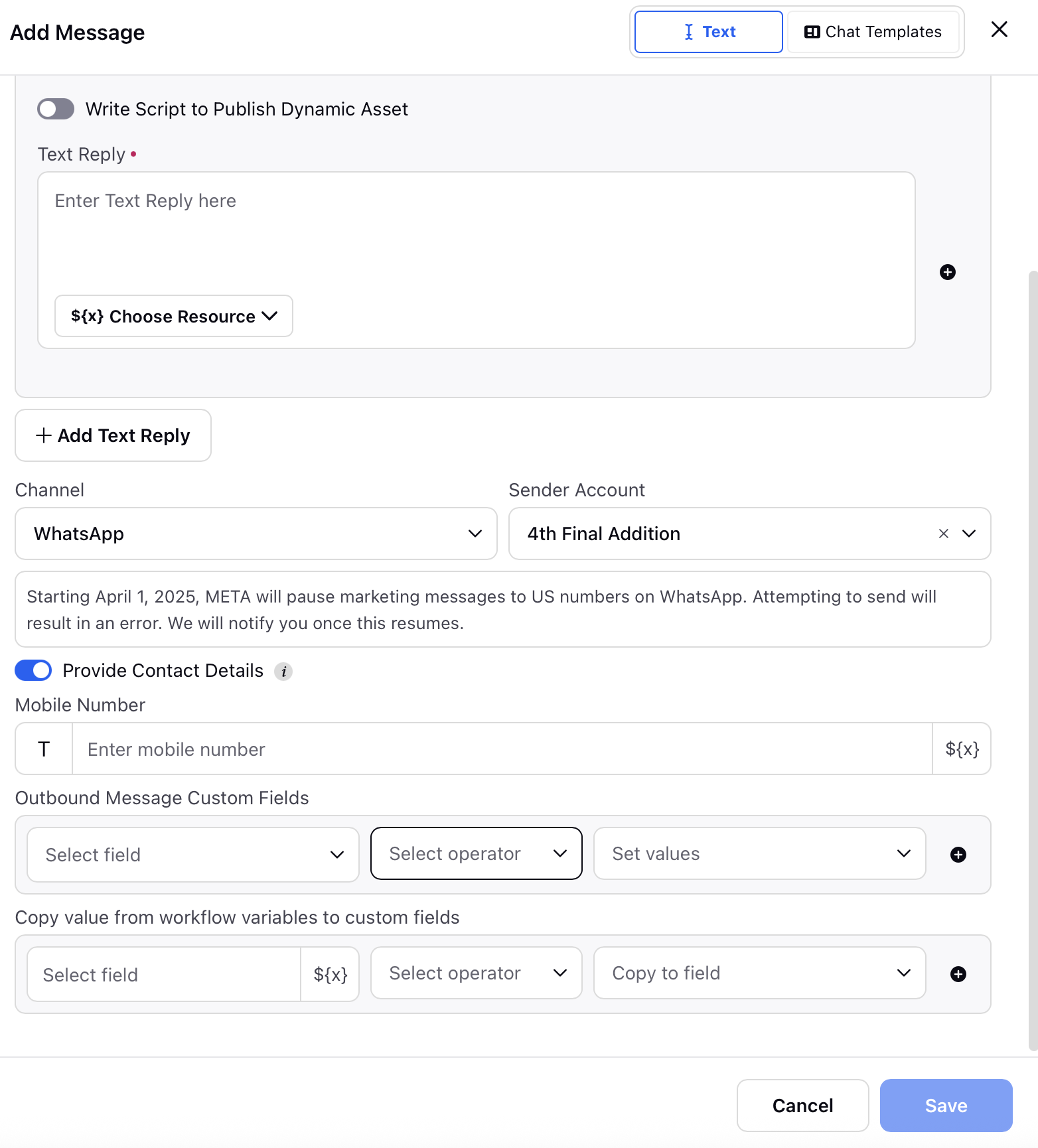
8. Click Save in the bottom right corner.
For Chat Template

Select Chat Templates at the top of the Add Message window.
Fill in the required fields on the Add Message window. Fields marked with a red dot are mandatory. Below are the descriptions of the fields on this page:
Name: Enter a clear and descriptive name for the node.
Add Assets: Select a Channel from the drop‑down list. Assets are channel‑specific and determine how the message content is delivered.
Add Existing: Allows you to attach an existing asset.
Create New: Allows you to create and attach a new asset.
Note: You will see the Invalid Reply and Timeout paths automatically when you select a button-based asset. These paths appear instantly in the canvas without any extra steps.
Invalid Reply and Timeout paths help define how a journey continues when a user sends an unexpected response or does not respond. They ensure clear routes for different user actions.
Sender Account: Select the account that will be used to send the message from the drop‑down list.
Provide Contact Details: Enable this switch if you want to include or expose sender contact information with the message.
Outbound Message Custom Fields: Allows you define Custom Fields and values that are sent with the message for tracking, personalization, or integration purposes.
Copy Value from Workflow Variables to Custom Fields: Maps workflow variables to outbound message custom fields, enabling dynamic data transfer from workflows into messages.
Click Save at the botton of the window.