




The global leader in enterprise social media management
For over a decade, Sprinklr Social has helped the world’s biggest brands reimagine social media as a growth driver with a unified platform, industry-leading AI and enterprise-grade scale.


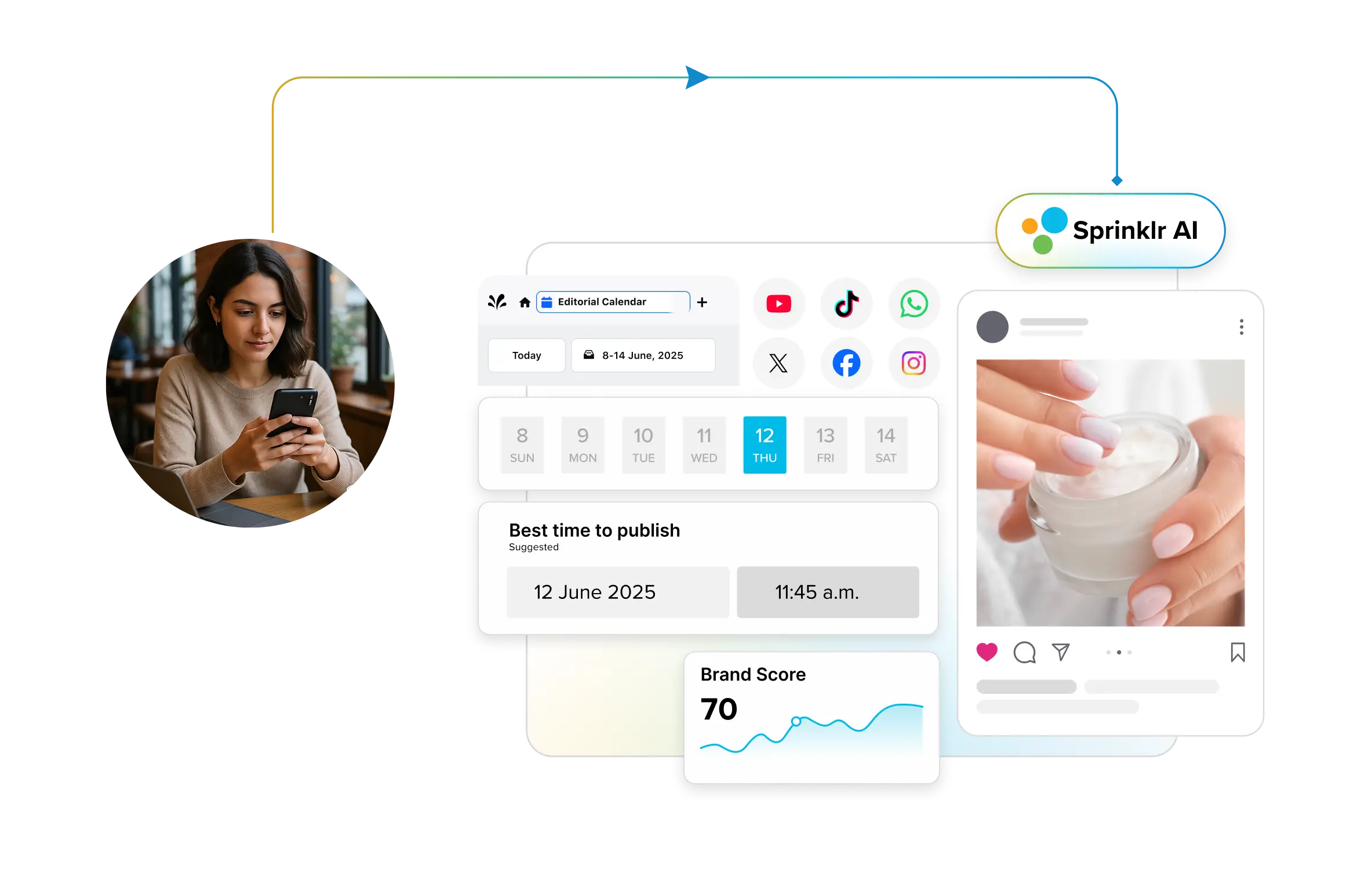
Organic vs Paid Social Media: How to Maximize ROI
Organic reach on major social platforms is declining, while paid social costs continue to rise, creating pressure for enterprise brands to maintain visibility without overspending. Teams managing multiple markets, products, and stakeholders are feeling this strain in both operations and budgets.
Relying solely on organic content makes it difficult to scale campaigns or track performance across regions. At the same time, over-reliance on paid social campaigns increases acquisition costs and produces results that rarely last beyond a quarter.
These challenges impact the entire organization. Leaders are responsible for forecasting social media ROI and protecting brand equity, while practitioners navigate complex workflows and performance expectations This blog explores both the strategies in depth, their opportunities and challenges, and the key factors brands need to build a strategy that drives reach, engagement, and revenue.
- What is organic social media?
- What is paid social media?
- What’s the real difference between organic and paid social media?
- When and why to choose organic vs paid social media?
- Building a hybrid strategy: How to combine organic and paid methods
- How to measure ROI from hybrid social media efforts
- Conclusion: Balance organic and paid social strategies
What is organic social media?
Organic social media includes all unpaid posts, stories, tweets and videos that brands share to engage followers, along with the conversations and community built around them. It’s the foundation of your brand’s online authority and trust. It’s essentially about how you show up in people’s feeds without spending on ads or posts. Organic results are slower and more qualitative but shifts in sentiment or brand mentions signal long-term ROI.
The key components of organic social media include:
- Consistent posting of valuable content
- Actively replying to comments and messages
- Participating in relevant social conversations.
- Keeping track of trends and best practices
Organic social media content can range from a thought-leadership post on LinkedIn to a fun blooper reel on Instagram, or a customer tweet praising your brand that you repost. Common tactics include hashtag challenges and sharing user-generated content (UGC), such as reviews.
A great example of organic social media is ASOS’s #AsSeenOnMe campaign. It was a highly successful Instagram campaign that is still generating user-generated content (UGC). Customers simply wore ASOS outfits, posted selfies and tagged the brand for a chance to be featured on its site.
Organic social also contributes directly to discoverability and brand loyalty. With 59% of Americans choosing brands they already know in Google results, increased visibility through social helps lift performance in search and paid channels, even when SEO results evolve gradually.
It also plays a functional role in customer service and community response by helping teams identify issues early, manage sentiment in real time, and maintain consistency across markets. For enterprise organizations, this creates operational efficiency and stronger brand stability.
The following KPIs provide a clear view of performance and success of your promotional campaigns:
- Engagement rate (likes, comments, shares per post): Indicates how effectively your content resonates with your target audience. High engagement means stronger brand affinity and better conversion potential.
- Community and follower growth: Reflects long-term brand trust and reach expansion, which lowers future customer acquisition costs.
- Reach (organic visibility): Shows how far your content spreads without paid support, helping assess brand awareness and message amplification.
- Sentiment (tone of comments): Measures audience perception and brand health, signaling whether engagement is driving positive advocacy or negative backlash.
- Share of voice: Reveals how much of the industry conversation your brand owns compared to competitors, a key proxy for market influence.
- Traffic or leads from social posts: Directly ties social activity to measurable business outcomes like website visits, signups, or pipeline growth.
Read more: 8 tips to drive organic growth on social media.
What is paid social media?
Paid social media means paying for ads or promoted content to reach specific audiences. Unlike organic posts that reach only part of your followers, paid social posts scale your message for greater outreach, depending on the price you pay to promote them.
Paid social media is essentially trading budget for guaranteed reach. It’s a powerful way to boost visibility, target ideal customers and drive quick, measurable actions, such as clicks or sign-ups.
Common paid social media formats include sponsored feed posts, banner or Story ads, and video spots. Key components of paid social media campaigns involve:
- Selecting your objective
- Audience targeting
- Designing the ad creatives
- Budget/bidding strategy
For instance, you could run Facebook Ads targeting lookalike audiences with a product carousel, or retarget LinkedIn users who visited your pricing page. Paid social media planning also includes social commerce ads (shoppable posts on Instagram or TikTok) and lead-generation forms (where users can submit information directly in the ad).
These media help brands reach the right people with personalized messages. In fact, one luxury home brand even achieved nearly 100× return on ad spend (ROAS) by targeting high-intent audiences on Facebook.
Tracking the following KPIs to assess the ROI of your paid social media strategy:
- Click-through rate (CTR): Indicates how effectively your ad creative and messaging drive engagement. Higher CTRs show your audience is responding, helping you optimize creatives and targeting for better returns.
- Conversion rate: Measures how many clicks result in desired actions like sign-ups, purchases, or downloads. Tracking conversions ensures your campaigns deliver tangible business value, not just impressions.
- Cost per acquisition (CPA): Reveals the true cost of acquiring a customer or lead. Monitoring CPA helps you allocate budgets toward the most profitable campaigns and audiences.
- Return on ad spend (ROAS): Shows revenue generated for every dollar spent. This metric directly informs whether your campaigns are profitable and guides future investment decisions.
Alongside these, monitor impressions, reach and frequency to understand audience exposure.
By analyzing these metrics together, enterprises can identify high-performing campaigns, refine targeting, optimize spend and design a paid social strategy that maximizes ROI across channels.
What’s the real difference between organic and paid social media?
At its core, organic social media builds trust gradually through consistent, unpaid content, whereas paid social media provides instant visibility through targeted advertising. Organic thrives on authenticity, relationships and long-term brand value, whereas paid excels at scale, precision and measurable results (but fades when the budget stops).
Here’s a quick comparison table that sums up the organic vs paid social media differences better:
Criteria | Organic Social Media | Paid Social Media |
Definition | Unpaid content shared to engage followers | Paid ads promoted for reach and conversions |
Cost | Free to post, costs time and creativity | Direct ad spend required |
Reach | Limited to followers and algorithmic boosts | Broad and scalable reach |
Targeting | Dependent on followers’ interests | Precision targeting by demographics, interests and behaviors |
Results | Gradual, harder to measure and test | Instant, easily measurable and testable |
Authenticity | High, builds genuine trust | Lower, seen as promotional |
Longevity | Long-term brand and community growth | Short-term visibility while the budget runs |
Speed | Slow and compounding | Fast and campaign-based |
Control | Full creative freedom, but harder to pivot quickly | Bound by ad guidelines, but the changing of messaging is quick |
Engagement | Driven by quality and interaction | Driven by paid reach |
Budget Fit | Suited for small or growing brands | Suited for brands with ad budgets |
How should you design campaigns that balance organic and paid social media to maximize engagement efficiency?
Designing a balanced campaign involves setting clear goals, maintaining consistent messaging across channels, mapping content to the customer journey and continuously iterating your strategy based on analyzed performance and audience behavior.
When and why to choose organic vs paid social media?
Understanding the right balance between organic and paid social media depends on several practical factors, such as your goals, resources, competition, audience maturity and content type. The sections below break down how to decide when to lean into organic, when to invest in paid and how to blend both for full-funnel growth:
1. Budget, team and resource constraints
With a small budget, a paid promotion strategy will drive quick traffic but have little return in the long term. Focus on organic content for compounding growth, using a small paid budget for targeted boosts. Conversely, if you have a larger ad budget and skilled specialists but few content creators, prioritize paid for short-term growth while keeping a basic organic presence.
Team skills matter as well; organic posting requires creativity and community management, while paid media campaigns require analytics and optimization.
2. Audience maturity and brand trust
If your brand is new or has low awareness, use paid social to jump-start visibility, but pair it with organic content to look credible when people check you out. Established brands with strong communities can lean more on organic since loyal followers amplify reach.
Also, match tactics to audience trust and preferences: ad-wary groups respond better to authentic organic posts. In trust-heavy sectors like finance or healthcare, organic thought leadership delivers lasting ROI, while paid works best once credibility is earned.
3. Content type and objective
Social media isn’t just about what you post; it’s about why. Each piece of content should match a clear goal: awareness, engagement, or conversion. This is exactly what differentiates a coherent social strategy from random posting. Moreover, organic and paid channels serve different timelines. Organic content compounds over time, feeding brand recall and emotional connection.
Paid, meanwhile, compresses visibility into a short burst of attention. If the content’s message doesn’t match that rhythm – say, a long-term storytelling post pushed through paid media or a hard-sell offer left to die organically – you waste both effort and budget.
The best campaigns start by asking: what’s the goal of this message, and how long should its impact last? From there, content format, channel, and amplification fall naturally into place.
Which content performs best in organic vs. paid social media environments?
Different content types suit organic or paid differently:
- Organic: Story-driven or educational content, such as case studies, user-generated stories, how-to guides and memes, performs best organically because audiences engage with and share these formats naturally.
- Paid: Promotional or time-sensitive content, such as flash sales, product launches, polished ads and demos, works best with paid campaigns for guaranteed reach and targeted visibility.
4. Business goals and funnel stage
Choosing between organic, paid, or a hybrid social media approach depends largely on your business goals and where your audience sits in the funnel.
Organic social works best for building awareness, credibility and community at the top and mid-funnel. Paid social excels at driving leads, conversions and retargeting in the mid and bottom-funnel. A hybrid approach combines the strengths of both, enabling full-funnel growth while maximizing ROI.
Approach | Goals | Funnel Stages | Why it Works |
Organic Social | Brand awareness, education, community building and trust | Top and mid-funnel | Builds credibility through consistent engagement, shares and word-of-mouth |
Paid Social | Lead generation, conversions and retargeting | Mid and bottom-funnel | Delivers quick, targeted reach and measurable ROI with clear CTAs |
Hybrid (Mix) | Full-funnel growth and brand-to-demand alignment | Awareness of decision | Organic nurtures and builds trust; paid amplifies and accelerates results |
Building a hybrid strategy: How to combine organic and paid methods
Combining organic and paid social media isn’t as simple as doing a bit of both. It requires a coordinated game plan so that each reinforces the other. Below is a step-by-step approach to implement a hybrid strategy that delivers results:
Step 1: Set clear goals and align KPIs for both organic and paid
Start by defining clear organic and paid goals with measurable social media KPIs: organic (engagement, referral traffic) and paid (cost per sign-up).
Discuss these goals with both teams to stay aligned and avoid conflicting targets or blame games. A customer might see a paid ad first, then engage organically before converting. Use unified metrics, such as tracking all leads in one dashboard, to compare ROI across channels. Finally, set up analytics to capture multi-touch journeys and accurately measure combined influence.
Here’s a comparative list of organic and paid social media growth metrics you can refer to:
Category | Organic metrics to track | Paid metrics to track |
Reach and awareness | Follower growth, organic impressions, profile visits | Ad impressions, reach, frequency, CPM |
Impressions and frequency | Post impressions per follower, share rate | Impressions, frequency, viewability |
Engagement | Likes, comments, shares, saves, engagement rate (engagement/impressions) | CTR, ad engagement rate, cost per engagement |
Traffic quality | Organic clicks, referral sessions, pages per session, bounce rate | Link clicks, CPC, landing page conversion rate |
Conversions and cost | Assisted conversions, leads from social and conversion rate from organic traffic | Conversions, CPA, ROAS, cost per lead |
Retention and community | Repeat engagement, community growth, sentiment, churn signals | Retargeting conversion rate, retention lift after paid exposure |
Content performance | Top posts by reach, engagement, saves, share velocity | Top ads by CTR, conversion rate and creative-level CPA |
Audience targetability | Organic audience composition, audience overlap, engagement by segment | Audience match rate, custom audience sizes, lookalike lift |
Auction and cost pressure | N/A directly, but monitor competitor ad volume qualitatively | CPM, CPC, bid floors, auction overlap |
Attribution and multi-touch | Organic-first touches, time-to-conversion after organic engagement | Last-click paid conversions, first-touch paid influence |
Step 2: Maintain consistent messaging and branding across channels
Running organic and paid campaigns together can cause mixed messaging. Prevent that with one unified content plan and shared brand guidelines. Use a single calendar to sync timing and themes. For example, organic posts share behind-the-scenes content, while paid ads highlight benefits.
You can also use governance tools like Sprinklr for tone and compliance checks. Every post or ad should feel like it's part of one brand voice to build trust and avoid confusion.
Step 3: Map content to the customer journey and platform
Don’t treat all content the same. Map your customer journey using stages such as awareness, consideration, decision, and post-purchase (which can vary depending on your brand’s strategy) and assign organic and paid roles to each stage.
- Use paid ads to build reach during the awareness stage and organic storytelling to drive engagement.
- In the consideration stage, retarget ad viewers with invites to organic webinars or demos.
- At decision points, use paid offers (trials, discounts) and organic social proof (reviews, case studies).
- Post-purchase, keep customers engaged through organic support and small paid upsell campaigns.
Additionally, ensure that all platforms work in harmony toward a shared objective, so every touchpoint reinforces the customer journey rather than competing for attention.
Step 4: Utilize analytics to amplify top-performing organic content with paid
This step focuses on identifying organic posts that outperform your standard benchmarks and using paid media to extend their reach. Track metrics such as engagement rate, saves, outbound clicks, and comment quality to determine which posts are delivering above-average results. These posts become strong candidates for paid amplification because they have already proven their effectiveness with a real audience.
Platforms allow you to convert a high-performing organic post into a paid placement, enabling you to scale content that has demonstrated impact rather than relying on assumptions.
The advantages of amplifying validated organic content with paid media include:
- Budget is directed toward assets that have demonstrated audience relevance and message clarity.
- High-performing content reaches new audiences who are not yet familiar with your brand.
- Paid activation is guided by measurable performance data, improving spend efficiency and reducing the risk of underperforming campaigns.
What is the ideal mix between organic vs. paid social media to understand where long-term ROI is strongest?
The ideal mix depends on goals and growth stage. Early paid spend tests messaging, reaches new audiences, and drives conversions. Over time, organic builds brand trust, community, and recall, compounding ROI. Paid should amplify strong organic content, while organic sustains engagement. Long-term ROI usually comes from organic, with paid serving as an accelerant.
Step 5: Ensure collaboration between teams and iterate continuously
A hybrid social media strategy also breaks the other silos within your organization. For that, your content and ads teams must collaborate closely like this:
- Hold regular check-ins or share dashboards showing total social performance.
- Cross-share insights so that the paid team can flag top-performing ad messages for organic inspiration, while the organic team can share trending community topics for new ad ideas.
- Align with support or sales if they also use social channels.
Treat your hybrid approach iteratively: test, learn, and refine. Start with a pilot campaign that mixes organic and paid strategies for one launch, then review combined analytics to identify gaps, and rebalance as needed.
How to measure ROI from hybrid social media efforts
Measuring the return on investment of a hybrid (organic + paid) social strategy can be challenging, but it’s essential. Here’s how to effectively measure ROI from your blended efforts:
- Adopt a unified measurement model: Track paid and organic social together using multi-touch or blended ROI frameworks, rather than treating them separately.
- Calculate blended social media ROI: Divide total conversions influenced by social (first, last, or mid-touch) by total social cost (ad spend + proxy for organic effort).
- Capture direct and indirect impact: Paid offers measurable returns, while organic drives brand trust, engagement and customer lifetime value.
- Quantify organic media value: Estimate what your organic reach would have cost if bought as ads, then include that as “earned media” ROI.
- Track synergy effects: Analyze how organic engagement boosts paid results (e.g., higher ad CTRs or conversion rates among engaged users).
- Balance short- and long-term ROI: Paid drives short-term gains, while organic strategies compound over time through brand affinity and customer loyalty.
- Track strategic outcomes: Beyond campaign metrics, measure longer-term indicators like reduced acquisition cost, retention lift and NPS growth.
Which AI-driven tools are best for rebalancing organic vs. paid social media investments in real time?
AI-driven tools like Sprinklr consolidate paid and organic data, manage social listening and content creation and handle paid boosts, providing a holistic view of performance and ROI and allowing you to rebalance organic vs. paid social media investments in real time.
Conclusion: Balance organic and paid social strategies
A successful social strategy requires organic and paid to work together. Organic identifies what resonates and builds brand equity. Paid expands the reach of proven content and drives high-intent actions with precision. When these channels operate separately, teams lose the ability to optimize budgets, measure true impact, and connect social activity to revenue and retention.
Enterprises need a single system that unifies planning, publishing, analytics, and paid activation. Without this alignment, insights stay siloed and teams cannot act quickly on what is working. Sprinklr Social brings these workflows into a unified environment so teams have shared data, shared KPIs, and full visibility into performance. The result is a balanced strategy that strengthens brand outcomes and improves spend efficiency across every channel.
Book a demo to learn more.