



The global leader in enterprise social media management
For over a decade, Sprinklr Social has helped the world’s biggest brands reimagine social media as a growth driver with a unified platform, industry-leading AI and enterprise-grade scale.




The Next Era of Social Media Marketing: From Scheduling to Intelligence

A sudden customer complaint can go viral in hours, while your enterprise team takes days to consolidate reports from multiple social platforms. By the time insights reach leadership, the opportunity to prevent churn, address messaging gaps, or capitalize on trends is gone.
This is the reality for many large organizations: fragmented tools, siloed teams, and legacy workflows make social media reactive instead of strategic. Marketing, CX, and product leaders struggle to act on signals that could influence campaigns, launches, or retention strategies.
To succeed, enterprises must turn social media into a coordinated system that not only tracks activity but informs decisions in real time. When signals are unified, analyzed, and operationalized across teams, social media becomes a source of measurable business advantage rather than a backlog of reports.
- How social media evolved from scheduling to strategic intelligence
- Why traditional social workflows no longer meet enterprise needs
- The social intelligence maturity model for modern enterprises
- New initiatives to reshape social media marketing
- What intelligent social marketing looks like in action
- The road ahead: From social media to social intelligence
How social media evolved from scheduling to strategic intelligence
Social media has expanded beyond content distribution. For enterprises, it now functions as a predictive layer of insight that influences planning, customer care, reputation management and product development. This evolution can be understood through three stages.
1. Scheduling Era:
Social used to be all about automation and consistency. Brands relied on tools to schedule posts, maintain a presence and ensure content went out at the right time. Success was measured by volume and regularity rather than impact.
2. Engagement Era:
As platforms and audiences grew, brands began managing conversations, communities and customer interactions. Social teams monitored comments, responded to messages and nurtured relationships, shifting focus from posting to two-way communication and lead generation.
3. Intelligence Era (Today):
We are now in an age where AI, analytics and unified data sources deliver real-time insights. Social media informs creative direction, media spending and even product decisions. Enterprise brands now manage hundreds of social handles and thousands of content assets each week, highlighting the growing complexity of the landscape.
This shift requires a new model of operating. Modern social teams must manage brand governance across markets, run multichannel campaigns, manage brand reputation and measure impact through business outcomes rather than surface-level engagement metrics.
By increasing investments in tools that unify customer data, you can listen, learn, and lead by understanding customer sentiment, customer expectations and risks before others even notice them.
Why traditional social workflows no longer meet enterprise needs
Even as social becomes a strategic engine, many enterprises still rely on outdated processes built around scheduling, siloed analytics and manual approvals of social media content. These workflows create inefficiencies that slow teams down and limit the value of insights.
Here is where the strain becomes visible:
- Disjointed data slows understanding: When social engagement metrics, sentiment analysis and performance reports live in separate dashboards, teams struggle to see the full story behind their content.
- Reactive decision-making hampers strategy: Social issues can escalate in minutes. Legacy workflows force teams to react late, especially in regulated industries that rely on slow approval chains.
- Inconsistent performance limits impact: Without unified intelligence, digital content strategies depend on instinct rather than validated signals. This creates uneven outcomes and makes budgeting unpredictable.
- Operational inefficiency drains resources: Large enterprises often manage hundreds of handles, thousands of assets and multiple regions. Manual reporting, fragmented reviews and disconnected systems create complexity that scales faster than teams can manage.
- Compliance and governance challenges grow: Rogue accounts, off-brand messaging and unmanaged access controls increase risk, especially when teams expand globally.
The gap between insight and execution widens with every new channel and product line. You need a unified, intelligence-driven approach that connects data, decisions and operations.
How Vodafone Idea Limited (Vi) achieved this:
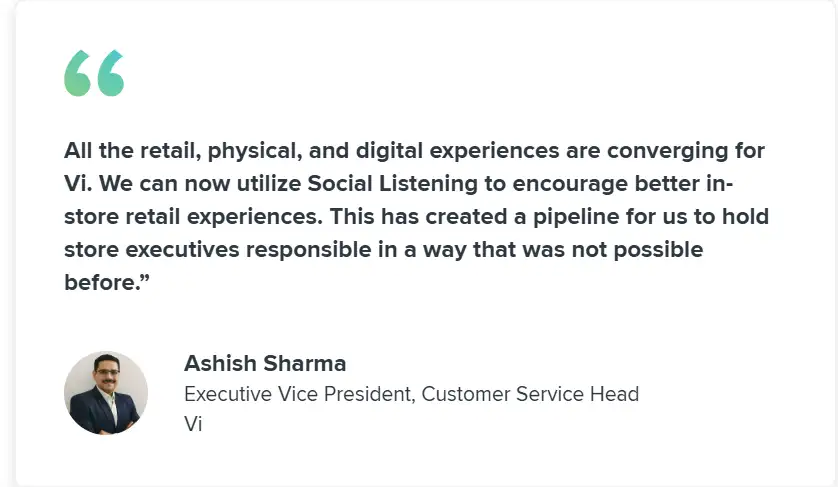
Vi, one of India’s largest telecom providers, needed a way to understand how customers talked about its brand across Google reviews and public feedback channels. These conversations influenced store reputation, shaped audience perception and affected brand credibility in each region. Without unified workflows, insights remained scattered and social teams could not translate these signals into meaningful marketing action.
By adopting Sprinklr’s Unified-CXM platform, Vi connected earned-media insights with its broader social and marketing workflows. The team identified recurring themes in customer feedback, responded faster to reputation risks and aligned local store experience with brand messaging.
Benefits included:
- Faster identification of issues that influenced brand perception with a 500% increase in Google reviews
- Clearer visibility into regional sentiment and 40% increase in positive Google reviews for physical stores
- 2.4x faster response to Google reviews with improved coordination between digital teams and on-ground operations
The social intelligence maturity model for modern enterprises
To understand how far your organization has progressed and what results you can unlock by advancing, this model outlines five levels of social maturity seen across global brands. Each level reflects not just a capability shift, but a measurable improvement in how you influence revenue, customer experience and brand health.
Level 1: Basic publishing
At this stage, teams maintain an active social presence but operate without a clear content strategy.
- Your team publishes content, tracks basic metrics, and reacts to visible conversations, yet the work remains disconnected from broader business goals.
- You lack visibility into how your content performs across regions or audiences, how it contributes to traffic or conversions or how it compares to competitors.
Level 2: Multi-channel engagement
You begin transitioning from posting to participating.
- Your teams monitor social mentions, route customer issues and close service gaps across multiple channels.
- You see improved customer satisfaction because your brand is more present and responsive.
- However, you still face blind spots. You cannot quantify how engagement ties to retention, you struggle to identify rising issues early and each team owns its own tools and dashboards.
Level 3: Unified analytics
Here, you connect paid, owned and earned data to form a single intelligence layer.
- You gain visibility into campaign influence, audience behavior shifts, recurring friction points and emerging themes.
- You understand which conversations drive positive sentiment and which correlate with churn.
- You can link social activity to website traffic, call volume or sales lift.
Level 4: AI-assisted decisioning
AI strengthens your strategic muscle by predicting what is likely to happen next and guiding your actions accordingly.
- Models identify early signals of crises, recommend creative direction, flag shifts in customer expectations and prioritize conversations based on projected revenue or retention impact.
- You reduce manual data analysis, accelerate decision cycles and improve the efficiency of both your marketing and care operations.
Level 5: Intelligence-driven operations
At this stage, you integrate social intelligence into how your organization operates, not just how it communicates.
- Insights from social channels feed product decisions, influence CX improvements, inform risk management, and direct real-time creative adjustments.
- You establish a shared intelligence layer that marketing, PR, care, research, and leadership use during planning and execution.
- You can forecast demand shifts, understand competitive moves, and measure the direct financial impact of conversations happening in your category.
Most organizations sit between Levels 2 and 3. You may already be engaging and analyzing performance, but disconnected systems limit how much value you can extract. Your next competitive advantage comes from progressing into Levels 4 and 5, where real-time intelligence drives action across the business and sets you apart from brands still operating with fragmented data.
New initiatives to reshape social media marketing
Gather the following key capabilities that define social media marketing in the intelligent era:
1. Unified data foundation
A single platform that connects paid, owned and earned channels gives teams a complete view of performance. Rather than toggling between separate dashboards, marketers can see how each campaign, post or engagement contributes to overall goals. This unified view reduces blind spots, highlights emerging trends faster and ensures that decisions are based on comprehensive insights rather than fragmented data.
The business payoff:
- Reduces redundant reporting and analyst hours, improving team productivity
- Accelerates decision-making and campaign approvals, driving faster approvals
- Optimizes budget allocation across channels, enhancing media efficiency and lowering CAC
- Ensures consistent reporting and messaging, strengthening brand safety
- Boosts overall content performance by enabling more strategic allocation of resources
Next steps for social media success:
- Identify key stakeholders who need access to unified dashboards
- Schedule regular cross-team reviews to translate insights into action
- Define internal data governance rules to maintain consistent reporting standards
- Plan quarterly workshops to interpret trends and adjust strategy
Must check out: Top social media analytics tools for 2026
2. AI-driven optimization
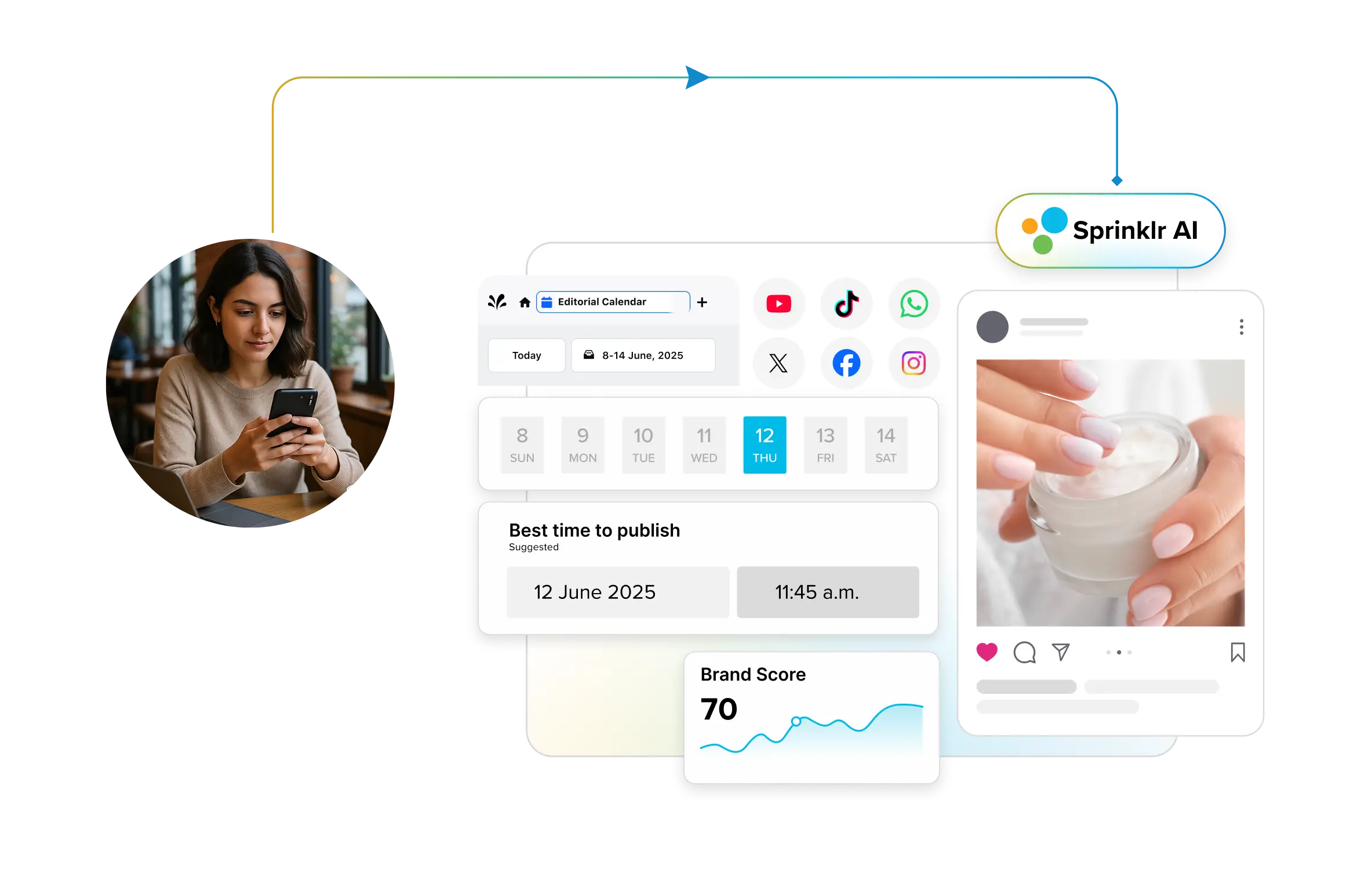
Predictive AI models suggest the optimal post timing, tone and creative approach based on audience behaviour. Instead of relying on intuition or past reports, marketers can anticipate what content will resonate. This shifts strategy from reactive to proactive, allowing teams to maximize reach and efficiency while continuously learning from real-time results.
The business payoff:
- Reduces trial-and-error content spend, delivering cost reduction and higher ROI
- Increases engagement, conversions, and CTR, improving content performance and media efficiency
- Minimizes risk of off-brand posts through predictive oversight, enhancing brand safety
- Automates routine analysis, freeing the team to focus on strategy, improving team productivity
- Optimizes targeting to reduce spend per acquisition, lowering CAC
Next steps for social media success:
- Train the team on AI tools to interpret predictive recommendations effectively
- Create a testing framework to validate AI-suggested strategies
- Document audience insights in Sprinklr’s customer intelligence tool derived from AI to guide other marketing channels
- Set up alerts for unusual trends or unexpected engagement patterns
3. Integrated listening and publishing
Real-time social listening tools track trends, sentiment and emerging conversations across social platforms. By linking these insights directly to publishing, marketers can respond with relevant content at the right moment. This capability ensures brands are not just present but contextually intelligent, posting content that aligns with audience expectations and market shifts.
The business payoff:
- Prevents investment in irrelevant campaigns, reducing costs and improving media efficiency
- Allows rapid adaptation of content to trends, accelerating approvals and improving time-to-market
- Increases engagement by posting timely, relevant content, raising content performance
- Detects negative sentiment early, mitigating brand risk and safeguarding brand safety
- Streamlines response processes, improving team productivity
- Aligns campaigns with audience needs, reducing CAC by increasing conversion likelihood
Next steps for social media success:
- Establish escalation protocols for urgent or sensitive social conversations
- Identify content gaps based on listening insights to inform future campaigns
- Integrate listening insights with influencer or partnership strategies
- Create a quarterly trend report to share with broader marketing and product teams
4. Cross-functional collaboration
Marketing, customer care and insights teams operate in a shared workspace, breaking down traditional silos. Teams can respond to customer feedback, resolve customer issues and execute campaigns with clarity and speed, ensuring social strategies are aligned with overall business objectives.
The business payoff:
- Reduces duplicated work and speeds campaign execution, improving team productivity
- Streamlines approvals and alignment across departments, delivering faster approvals
- Ensures consistent messaging across all touchpoints, strengthening brand safety
- Aligns campaigns and customer responses, enhancing content performance
- Prevents misaligned campaigns, reducing wasted spend and lowering CAC
- Optimizes budget allocation across teams, improving media efficiency
Next steps for social media success:
- Develop a shared glossary or guidelines for messaging consistency across teams
- Set clear SLAs for responses to internal requests or campaign approvals
- Assign cross-functional champions to lead collaboration initiatives
- Conduct periodic alignment meetings to review successes and areas for improvement
5. Closed-loop measurement
AI-driven analytics tie social activities directly to awareness, engagement, conversions and revenue. Brands can measure not just what posts performed but why they performed and how they impact business outcomes. This capability creates a feedback loop where insights continuously inform creative, media and targeting decisions, enabling smarter iteration and higher social media productivity. Now, brands can measure the performance at scale using Sprinklr’s social media management tool.
The business payoff:
- Focuses spend on high-performing content, reducing costs and improving media efficiency
- Provides clear insights for faster decision-making and approvals, improving team productivity.
- Increases engagement and conversions by iterating on data-driven insights, boosting content performance
- Identifies risky or underperforming campaigns early, enhancing brand safety
- Optimizes targeting and spend to lower CAC by tools like Sprinklr’s social advertising platform.
- Strengthens ROI by linking social activity to revenue outcomes
Next steps for social media success:
- Create visual dashboards linking social KPIs to business outcomes for executive reporting
- Use insights to inform budgeting and media spend decisions
- Identify underperforming content and run hypothesis-driven experiments to improve social inbox experiences
- Share measurement learnings across marketing, product and sales teams to influence broader strategy
Pro tip:
Build a weekly “intelligence sync” with your core teams. You can spend just 15 minutes reviewing top signals from listening, best-performing posts, emerging risks and upcoming cultural moments.
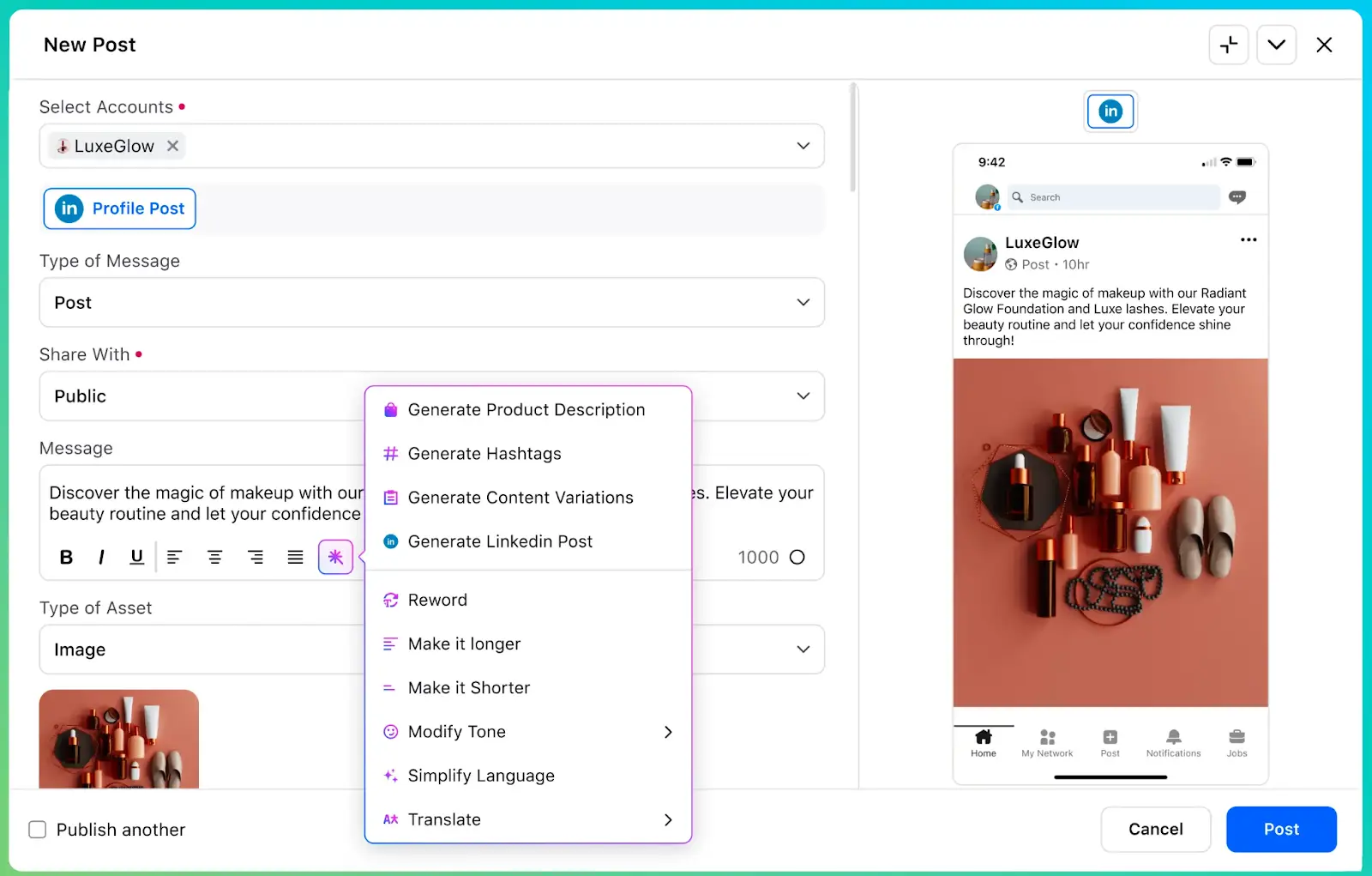
This quick ritual turns scattered social insights into a consistent decision engine and helps teams act with confidence instead of reacting in silos. You can use Sprinklr’s social media publishing tool to make these reviews smarter and more actionable. The platform helps you deliver content, engage customers, drive revenue and analyze performance across 30+ social and messaging channels.
Its AI-powered models provide pre-built verticalized and customer-specific recommendations with over 90% accuracy, while Generative AI keeps your content strategy current and effective.
Sprinklr also supports broad channel coverage, enabling teams to add new channels in weeks, not months. Advanced automations, granular access controls, custom approval workflows and AI-powered compliance protect your brand at every step.
Your enterprise benefits from highly customizable workflows that solve unique business needs, making it easier to translate insights from your weekly sync into coordinated, measurable action.
What intelligent social marketing looks like in action
Brands that embrace intelligence-driven social strategies are already seeing measurable impact. These short examples illustrate how Sprinklr customers are using insights, AI and unified workflows to move beyond execution and drive real results:
Microsoft
Microsoft’s Social Intelligence Practice used Sprinklr to listen across channels and surface actionable customer insights, generating 8.6billion mentions in the first year. This intelligence doubled stakeholder projects and directly informed product positioning and hybrid-work messaging.
#Inspiration Corner: Intelligence-era marketing takeaways
- Use large-scale listening to validate product narratives
- Identify emerging customer needs before they escalate
- Feed intelligence directly into product, comms and GTM decisions
Sonos
Sonos combined unified publishing, audience segmentation and real‑time reporting via Sprinklr to support the launch of their PLAYBASE speaker. By linking creative, targeting, and analytics in a single workflow, the campaign reached 19million people and delivered a 3× return on ad spend, while boosting brand preference and ad recall.
#Inspiration Corner: Intelligence-era marketing takeaways
- Align creative, targeting and analytics in one workflow
- Use real-time audience signals to refine campaigns mid-flight
- Activate segments based on behavior and intent, not assumptions
Chick‑fil‑A
When Chick‑fil‑A replaced its original BBQ sauce, it used Sprinklr listening tools to detect a 73% negative sentiment drop. They rapidly deployed a #BringBackTheBBQ campaign, reversing sentiment in days and generating massive social engagement.
#Inspiration Corner: Intelligence-era marketing takeaways
- Monitor sentiment continuously to catch risks early
- Build rapid-response playbooks powered by real-time insights
- Turn negative moments into loyalty-building opportunities
These examples show how brands are moving beyond posting content to building intelligence‑driven workflows that detect trends, engage audiences and deliver business outcomes.
The road ahead: From social media to social intelligence
The future of social marketing is all about turning social channels into a source of strategic intelligence. This shift requires more than a new tool. It demands a mindset change, where data, insights and collaboration inform your every decision. Brands that embrace this approach can anticipate trends, respond faster and connect social activity directly to profitable business outcomes.
See how your brand can harness social intelligence. Get a personalized Sprinklr demo today.
Frequently Asked Questions
It means using real-time insights, unified data and AI-powered analytics to make proactive decisions. Brands move beyond posting content to understanding trends, audience behavior and business impact, allowing teams to act strategically rather than reactively.
Unlike standalone scheduling or analytics platforms, Sprinklr combines publishing, listening, engagement and measurement in one unified platform. This enables cross-team collaboration, real-time insights and AI-driven recommendations that inform creative, media and strategy decisions.
AI is designed to augment human decision-making, not replace it. It automates repetitive tasks, analyzes large data sets and surfaces actionable insights, freeing social managers to focus on strategy, creativity and high-impact engagement.
Beyond likes and shares, focus on metrics that connect to business outcomes. These include engagement quality, sentiment, conversions, revenue impact and reach within strategic audience segments. The goal is to link social activity to measurable business value.
Even smaller teams can benefit by unifying channels, using AI-driven insights for content optimization and focusing on high-impact metrics. Cloud-based platforms like Sprinklr scale to fit team size, helping smaller organizations make strategic decisions without requiring a large staff or complex tech stack.