




The global leader in enterprise social media management
For over a decade, Sprinklr Social has helped the world’s biggest brands reimagine social media as a growth driver with a unified platform, industry-leading AI and enterprise-grade scale.




Best Times to Post on Facebook in 2026 [Daily Best Times]

For social teams, the question is no longer "What is the best time to post?" but "How do we systematically identify and scale our brand's unique optimal times?" While meta-analyses suggest broad windows like 9 AM - 11 AM and 1 PM - 4 PM on weekdays remain strong starting points, relying on generic schedules is a strategic misstep. Facebook's algorithm prioritizes meaningful, early engagement within your specific community. Your 2026 strategy must pivot from consulting static charts to deploying a dynamic, data-informed timing model.
⚠️ Disclaimer: The patterns discussed below are synthesized from aggregate engagement data across North American and Western European B2B and B2C enterprises. They are a framework for analysis. Your audience data is the ultimate authority.
- Best times to post on Facebook on Monday
- Best times to post on Facebook on Tuesday
- Best times to post on Facebook on Wednesday
- Best times to post on Facebook on Thursday
- Best times to post on Facebook on Friday
- Best times to post on Facebook on Saturday
- Best times to post on Facebook on Sunday
- Best posting times on Facebook by content type in 2026
- Tips to find the best posting time for your audience
- Find your best time rather than the best time
Best times to post on Facebook on Monday
Standard times: 9 AM - 12 PM and 1 PM - 3PM
Weekday routines kick off with users checking feeds in the morning and during lunch. Content that helps audiences plan, reflect, or anticipate the week tends to perform better early in the day.
What to post:
- Planning & “week-ahead” content to meet Monday reset behavior.
- Light explainer video or carousel — optimized captions; hook within 3–5 seconds.
These formats convert work‑break browsing into saves/comments.
How to apply: Publish leadership insights, weekly highlights, or planning content in these slots. For enterprise brands, Monday mornings are ideal for industry trend updates or research highlights that position your team as forward-thinking.
Industry insight: B2B/professional services/tech, where audiences browse during mid‑morning breaks.
Regional note: In Europe, Facebook engagement tends to rise in the evening hours, 7 PM - 10 PM CET, as professionals finish work and browse social platforms while unwinding. This shift reflects post-work scrolling patterns, making it a strong window for lifestyle, entertainment, or retail brands targeting European audiences.
Suggested read: How Often to Post on Social Media to Increase Your Brand Reach
Best times to post on Facebook on Tuesday
Standard times: 9 AM - 2 PM and ~5 PM
Audience activity peaks earlier in the week. Mid-morning through early afternoon captures both commute time and midday breaks, often resulting in stronger social engagement.
What to post: Educational carousels, product explainers, polls and interactive posts that invite comments or quick decisions.
Industry insight: Education, SaaS, and retail often perform well on Tuesday as buyers use early-week windows to explore options and shortlist vendors or offers.
Regional note: In the UK, 4 PM - 8 PM GMT/BST frequently outperforms mornings for consumer content, as people finish work and shift to relaxed browsing. Trade and B2B audiences may still respond earlier in the day, especially to thought leadership and product updates.
Another read: Social Media Posting Schedule: How to Create and Schedule Using Tool
Best times to post on Facebook on Wednesday
Standard times: 8 AM - 3 PM, ~5 PM
Midweek behavior is more predictable and stable, making Wednesday a reliable day for campaigns that need consistent engagement.
What to post: Informational posts, product demos, event highlights, recaps from webinars or conferences and live sessions designed to break up the workday.
Industry insight: Media, finance and enterprise tech often lean into midweek to release product news or performance updates because audiences are more settled and receptive.
Regional note: In the U.S. central region, posting between 11 AM and 1 PM CST shows high engagement, particularly for lifestyle and retail brands.
Winning brand moves:
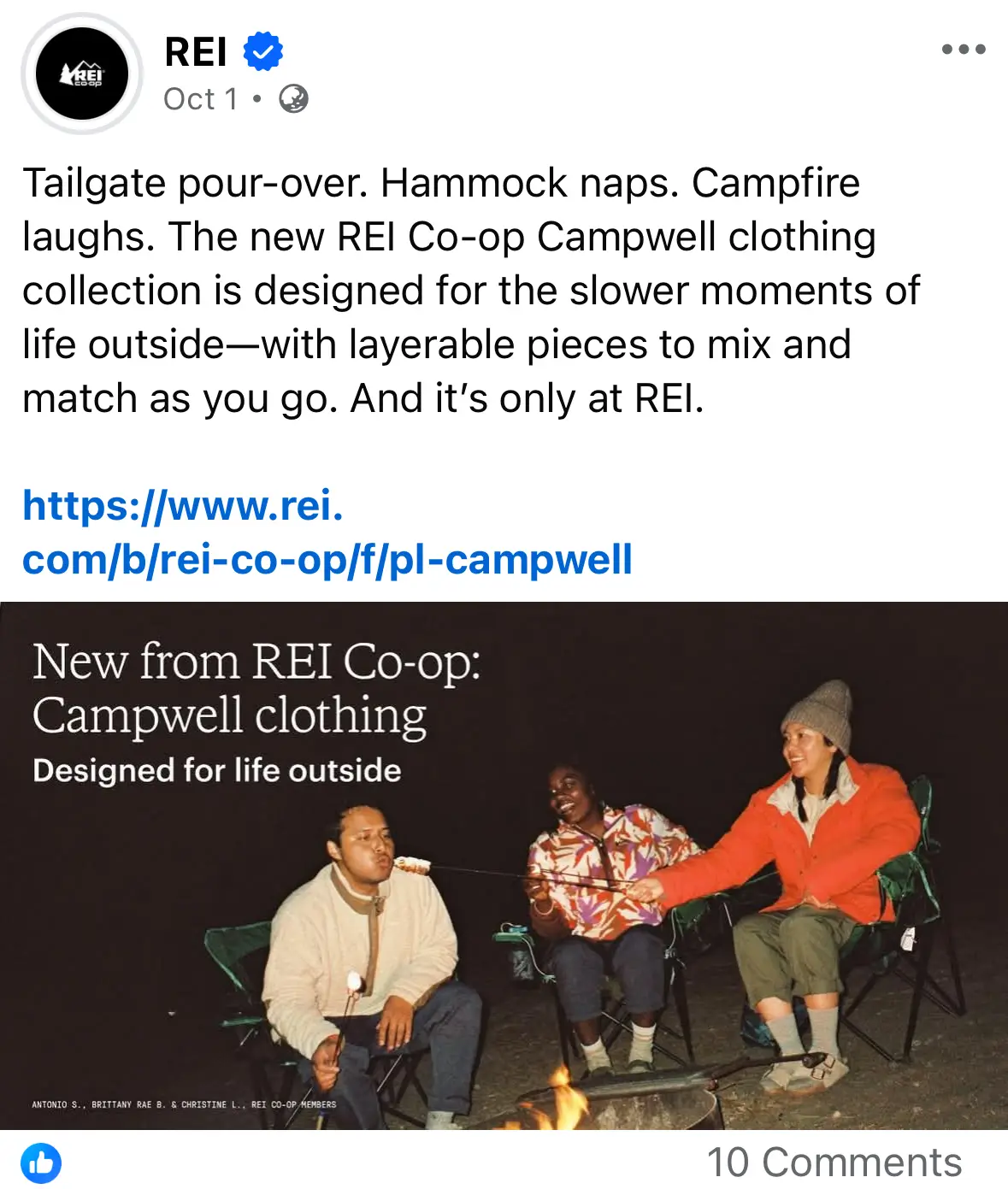
REI taps into midweek engagement by posting lifestyle-driven outdoor content that feels like a mental break, perfect for Wednesday’s “slump” browsing pattern. In this example, REI introduces its Co-op Campwell clothing collection with a warm, story-led visual that highlights slow outdoor moments like campfire nights and hammock naps.
Read More: Best Times To Post On Instagram In 2026
Best times to post on Facebook on Thursday
Standard times: 8 AM - 2 PM and 5 PM - 7 PM
As the week winds down, audiences begin shifting from pure productivity to planning and inspiration.
Mostly posted content: Campaign storytelling, UGC, throwback posts and weekend previews (for example, Throwback Thursdays #TBT).
Industry insight: Hospitality, entertainment, travel and consumer brands frequently use Thursday to seed weekend plans with early offers or inspirational content.
Regional note: Across major UK cities, late morning windows around 10 AM to noon can be effective for teasing weekend experiences before calendars fill.
Best times to post on Facebook on Friday
Standard times: 9 AM - 11 AM and 2 PM - 6 PM
Fridays often mix work and leisure behavior, making them useful for light, conversion‑oriented content that nudges weekend action.
Mostly posted content: Entertaining Reels, lighthearted posts, weekly recaps and product teasers that tie directly to weekend usage or offers.
Industry insight: Retail, media and FMCG brands often see strong performance when they use these windows to trigger last‑minute purchases, entertainment choices or subscriptions.
Regional note: On the U.S. West Coast, early‑to‑mid afternoon (for example, 1 PM - 3 PM PT) often coincides with planning and early log‑off behavior, which can boost engagement for leisure and entertainment content.
Learn More on Facebook Marketing and How to Reach Your Target Audience
Best times to post on Facebook on Saturday
Standard times: 10 AM – 2 PM, optional 7 PM – 8PM
Weekend behavior is less predictable, but late morning to early afternoon generally sees more active browsing than early mornings or late evenings.
Mostly posted content: Lifestyle/travel/food/community stories; contests & promotions timed to brunch scrolls.
Industry insight: Use Saturdays for community stories, lifestyle narratives, and event recaps — content that resonates with relaxed browsing.
Regional note: In major cities like New York, engagement often peaks slightly later in the day, around mid‑afternoon, as mornings skew toward errands, workouts and brunch.
Best times to post on Facebook on Sunday
Standard times: 9 AM - 11 AM and ~1 PM – 3 PM
Sundays combine reflection, planning and low‑intensity browsing, making them ideal for emotionally resonant or reset content.
Mostly posted content: Reflective posts, inspirational stories, weekly recaps, community highlights and next‑week preview content.
Industry insight: Media, fitness and nonprofits often perform well on Sundays, when audiences are more receptive to purpose‑driven, community‑oriented stories.
Regional note: In the United States, publishing in ET reaches a large share of U.S. users; with ET and CT only an hour apart, consolidating schedules reduces operational overhead. (Commonly cited estimates place ~47% of the U.S. in ET and ~29% in CT.)
⭐ Overall, if you want a simple rule: aim for mid-mornings (9 AM – 11 AM) and early evenings (6 PM – 8 PM) as a starting point and then refine with your analytics.
Still confused on what is the best time to post on Facebook?
There’s no single “best” time — here’s what this really means:
We keep using these ranges because multiple analyses (including studies of tens of thousands of Facebook accounts) show similar sweet spots: weekdays mid-morning to early afternoon, with weekends strongest late mornings and early afternoons.
But here’s a key insight: Context beats clock. Raw timetables only get you so far. Facebook’s algorithm rewards engagement velocity — that means your first hour of interactions drives how widely a post circulates. So instead of chasing clocks, build your posting strategy around moments when your audience is most receptive, not just awake. Use social analytics to map when your unique audience interacts.
Best posting times on Facebook by content type in 2026
Format now matters as much as timing. Different Facebook formats map to different moments in the day and the algorithm weights watch time, saves, shares, and comment quality differently. You need to deliberately diversify posting windows by format to avoid fatigue and maximize each asset’s strengths.
1. Video
Best time: 1 PM - 3 PM and 7 PM - 9 PM
Why it works: Mid‑afternoon breaks and early evenings are high‑attention windows for longer content and tutorials; users have time to watch, react and share.
KPI impact: Strong reach and impressions driven by longer watch time, solid engagement and higher watch‑through rates — key signals for distribution.
Focus: Watch time, shares.
Quick tip: High‑quality video assets require more lead time and cross‑team coordination, so scheduling and promotion plans must be locked in advance.
2. Image/Carousel
Best time: 12 PM - 2 PM and 6 PM - 8 PM
Why it works: Lunchtime skim behavior favors fast‑loading visuals; evening leisure scroll adds reactions and shares to snackable content.
KPI impact: Strong reach and reactions thanks to low friction; saves and shares trend higher for high‑value visuals like infographics or checklists.
Focus: Link clicks, saves, leads.
Quick tip: Static images are easy to produce at scale but can blur into the feed without distinctive creative or clear value.
3. Status/link (text-led)
Best time: 9 AM -11 AM
Why it works: Morning scrolls are geared towards news, updates and commentary, which suits text‑first posts that invite discussion or clicks.
KPI impact: Higher comment volume and click‑throughs; reach depends heavily on early engagement.
Focus: Meaningful comment depth, qualified link clicks.
Quick tip: Text‑only posts can see more volatile organic reach and often benefit from light promotion to achieve consistent visibility.
4. Reels
Best time: Wednesday - Saturday, 10 AM - 12 PM and 7 PM - 8:30 PM
Why it works: Reels thrive when discovery behavior spikes — late mornings, mid‑afternoons and early evenings when users seek quick entertainment or ideas.
KPI impact: Very high reach and impressions as Meta aggressively promotes Reels with strong engagement and watch‑through rates.
Focus: Watch time, shares.
Quick tip: Staying competitive requires constant creative iteration and a testing pipeline that can refresh hooks, lengths and CTAs weekly.
Learn more on Instagram Reels Algorithm
5. Live streams
Best time: Tuesday, 1 PM - 4 PM, test evenings/weekends for consumer audiences.
Why it works: This window balances availability for both work‑related and consumer content, and they align with break times when users can commit to live viewing.
KPI impact: High real‑time engagement (comments, reactions, Q&A) and strong cumulative watch time that can be repackaged as VOD content.
Focus: Peak concurrent viewers, comments.
Quick tip: Lives require coordination across hosts, producers and time zones; promoting replays as on‑demand assets is crucial to maximize ROI.
Suggested read: 5 Types of Social Media Content Based on Purpose
Tips to find the best posting time for your audience
Timing matters, but not in isolation. A few rigorously applied principles will help elevate performance:
- Audit Page/Business Suite insights by hour/day: Move beyond surface social media metrics. Export 90 days of post-level data. Chart engagement rate (not just reach) by day and hour. Look for dense clusters of high-performing activity (e.g., Tuesday-Thursday, 10 AM-2 PM) — these are your brand's unique "power windows." Publish 15-30 min before your audience’s peak.
- Segment by audience cohort & goal: Layer this data. Compare activity patterns for followers vs. non-followers, or by key regional markets. Are your link clicks concentrated at 10 AM on Tuesdays, while your video watch time peaks at 8 PM on Thursdays? Align objectives with these sub-patterns. Gen Z often leans toward evening discovery, while Millennials engage during workday breaks — reflect this in schedule variants per segment/geo.
- Run A/B time‑slot tests: For four weeks, systematically post similar high-quality content in your hypothesized power window, a control window, and one experimental window. Measure not just engagement rate, but downstream metrics like link clicks, lead form opens, or content saves. Let this data, not industry averages, finalize your calendar.
How can brands optimize weekly posting times for Facebook at scale?
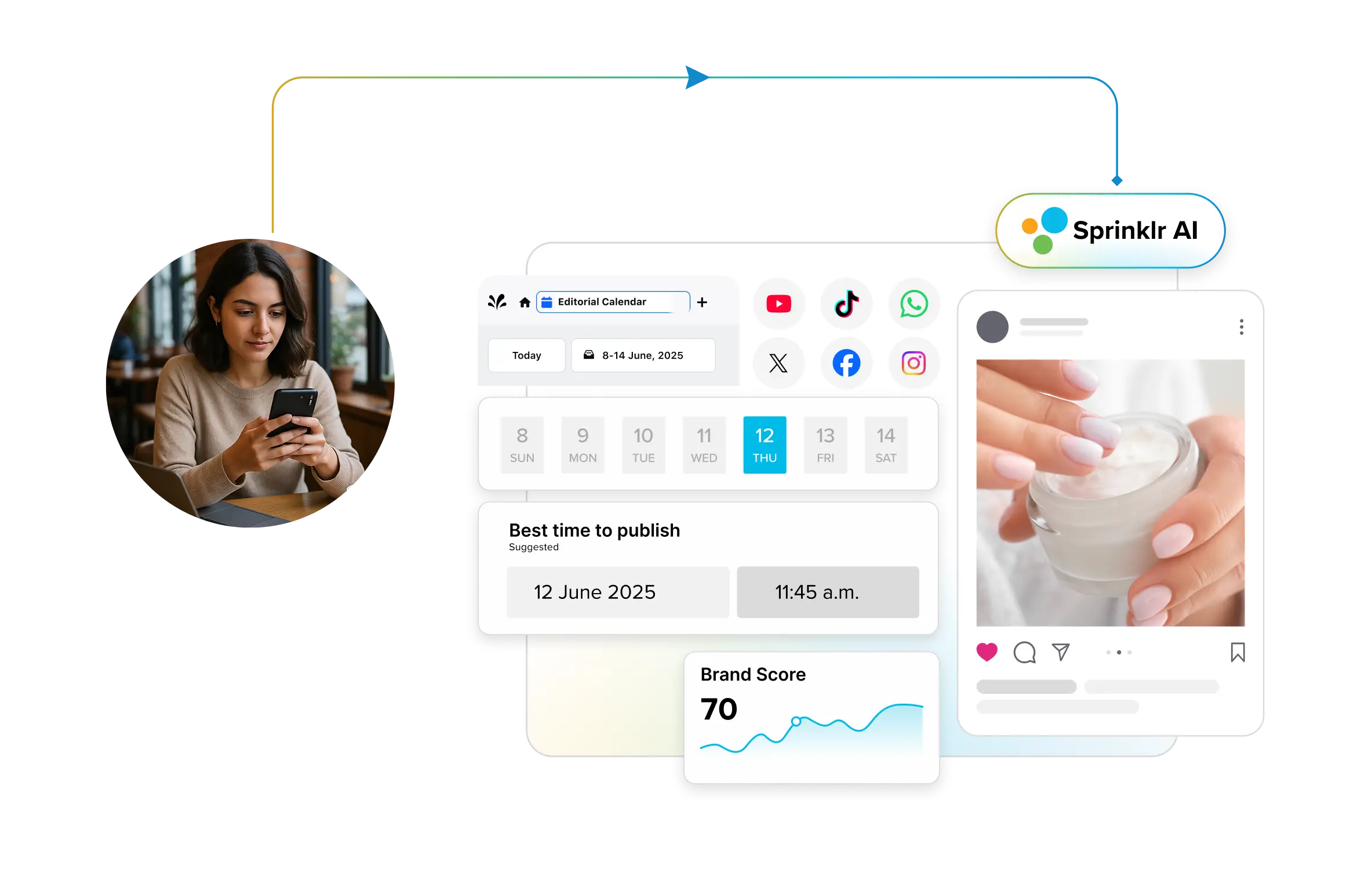
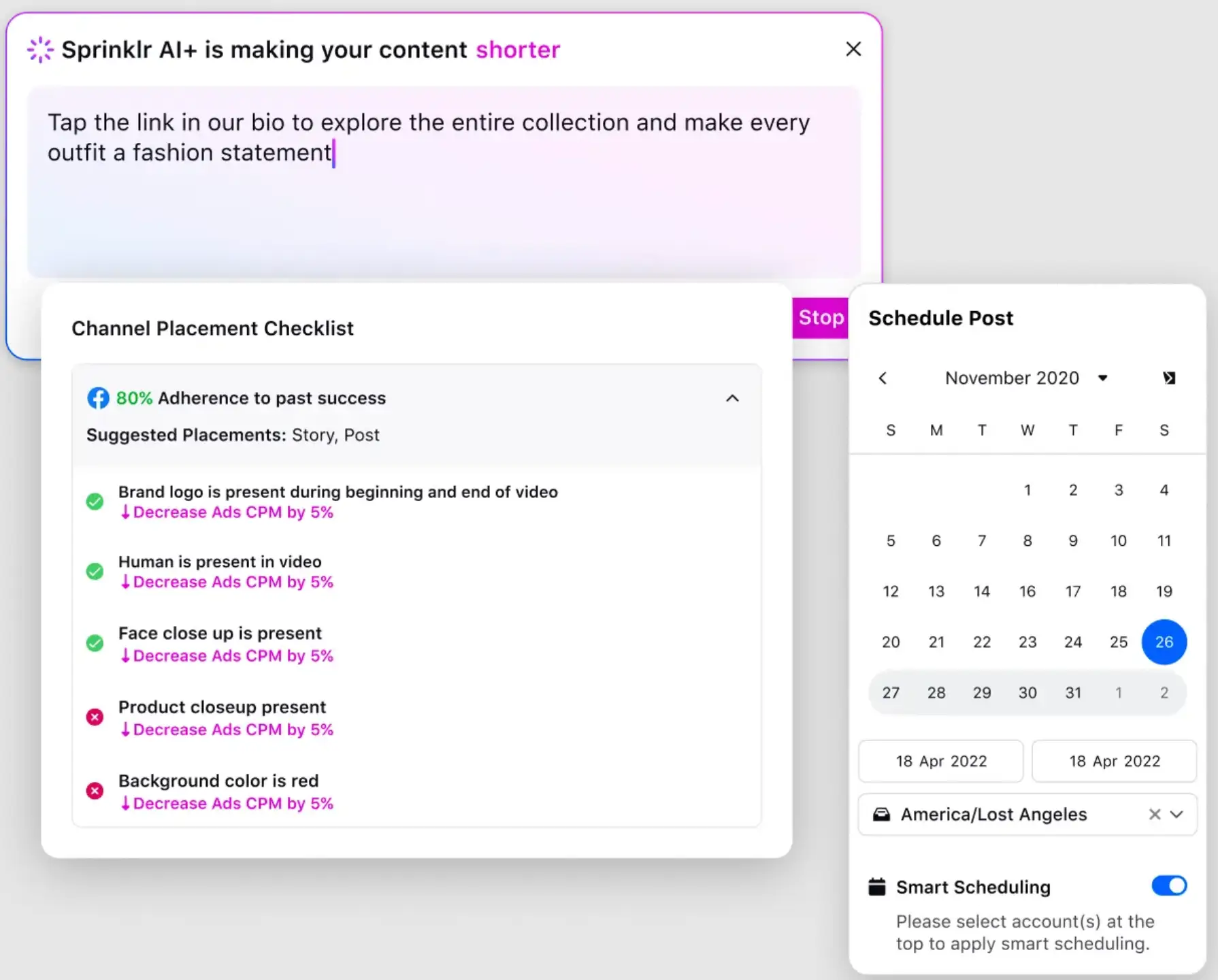
Use Sprinklr Social (or Meta scheduling insights) to auto‑analyze engagement across Pages and regions, generate AI‑recommended send‑times, and orchestrate region‑wise cadences (ET/CT/UK/EU) without manual juggling. Continuous learning adjusts windows by format (e.g., Reels vs. carousel) and performance, so every post lands when its audience is most likely to see and act.
Find your best time rather than the best time
In 2026, the best time to post on Facebook is defined by how well you understand your audience’s daily rhythm. The real opportunity lies in watching when your community chooses to engage. Keep experimenting. Let insights guide your posting strategy. Instead of relying on outdated lists, use tools that evolve with your audience and algorithm shifts. Timing isn’t dead, but context matters more than watching the clock.
With Sprinklr Social, brands can analyze engagement across regions, audiences and post types to uncover personalized posting windows and optimize them automatically.
Book a demo to see how Sprinklr can help you turn every post into a perfectly timed connection.
Frequently Asked Questions
There isn’t a single best time anymore. Engagement varies by audience and content type. However, weekdays between 9 AM - 11 AM and 1 PM - 4 PM generally see strong performance.
Industries with consumer-facing content (retail, lifestyle, food) tend to perform better during evenings and weekends, while B2B and tech brands often see higher engagement during weekday mornings.
Both influence performance, but consistency has a greater long‑term impact. Posting regularly helps the algorithm understand your Page’s reliability and audience relevance. Pair this consistency with data‑backed timing — publishing when your audience is actually active, to maximize early engagement, watch time, comments, and saves. In 2026, quality + consistent cadence + smart timing outperform volume alone.
Go to Meta Business Suite, then Insights → Audience → When your followers are online. Review the hourly and daily activity charts to identify when your audience is most active. Schedule posts 15–30 minutes before peak activity to capitalize on early engagement signals and improve distribution.
Generally, Tuesday through Thursday delivers the most consistent engagement across industries. Mondays tend to have moderate activity, while weekends perform better for entertainment, food and lifestyle brands.