




The global leader in enterprise social media management
For over a decade, Sprinklr Social has helped the world’s biggest brands reimagine social media as a growth driver with a unified platform, industry-leading AI and enterprise-grade scale.

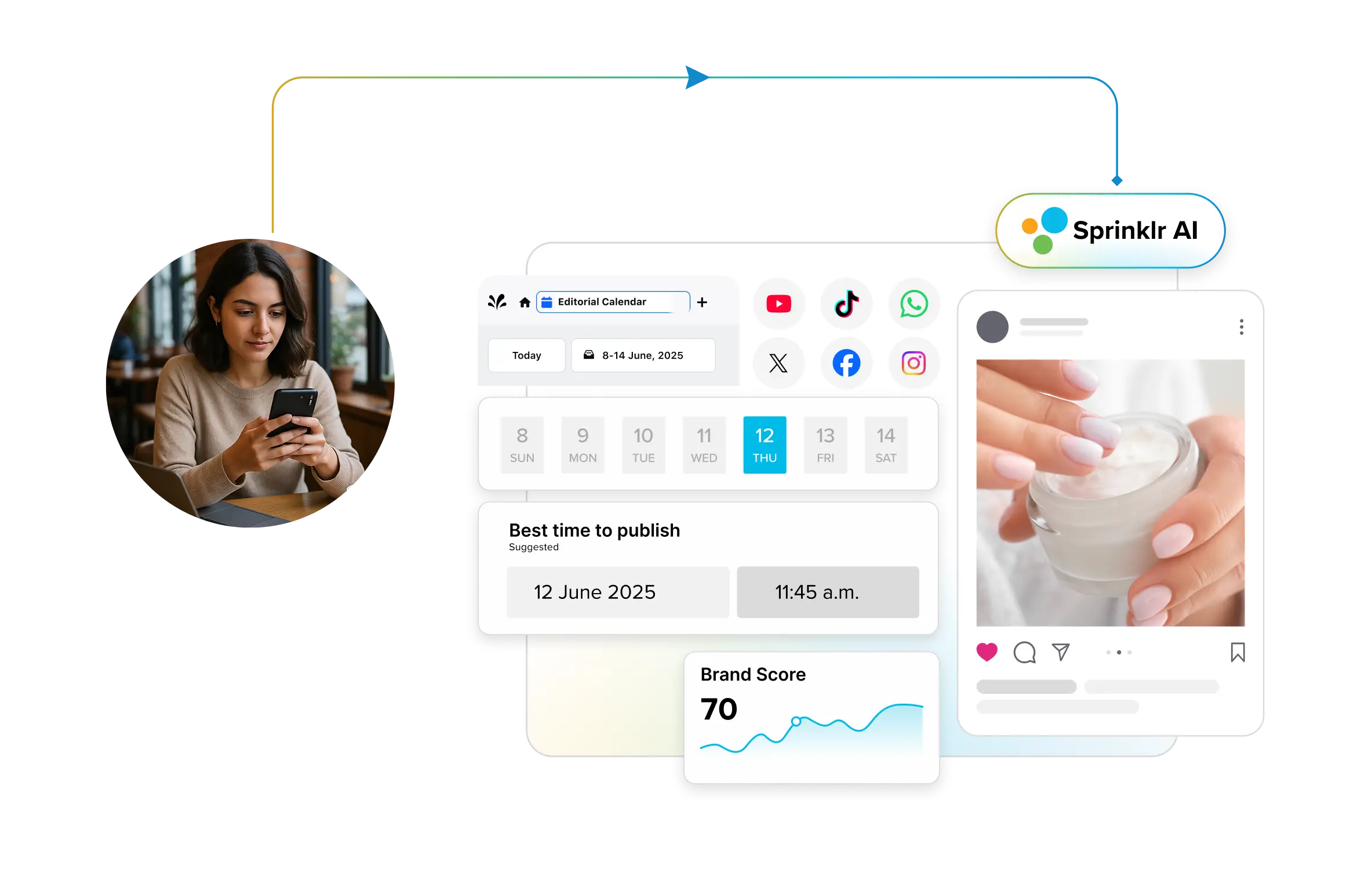
Best Time to Post on LinkedIn in 2026: Data-Backed Insights

LinkedIn feeds are noisier than ever. With ~1.2B+ members globally, brand posts now compete with a steady stream of creator, employee, and executive updates, especially during work hours. Timing alone won’t fix weak content, but publishing when your audience is most likely to engage materially improves early‑hour visibility, which the feed algorithm still uses to decide broader distribution.
Recent large‑scale analyses converge on a practical baseline for 2026 — mid‑week, mid‑morning windows in local time. Use these as starting points, then refine by segment (region, role, industry) with your own analytics or AI scheduling. Posting too early means your content is buried by the time your audience checks in; posting too late means they have already moved on to other conversations.
This blog explores the best time to post on LinkedIn in 2026 and, more importantly, how leading brands use analytics and scheduling to align posting windows with peak activity, content formats, and audience segments.
Global data trends for LinkedIn posting
LinkedIn’s audience behavior has evolved over the past few years. With professionals spending more time online and brands publishing at record volume, knowing when audiences engage has become critical for visibility.
Here are a few global data trends for how, what and when people are posting on LinkedIn today:
1. Mid‑week outperforms: Company Pages consistently see higher engagement on Tuesday–Thursday versus Monday/Friday. Weekends are generally weaker.
2. Mobile-first posting patterns: Around 57% of LinkedIn sessions now happen on mobile. Commutes, lunch breaks, and end-of-day scrolls are new engagement peaks.
3. Content that performs: Posts with video generate 3.2x more reactions than image-only updates, while carousels and polls dominate mobile feeds. You need to scale creative production and approvals fast enough to keep up with what performs.
4. B2B vs B2C divergence: B2B decision-makers come to LinkedIn for industry insight and trusted expertise (the top organic channel for B2B social marketing). Native documents/carousels (PDFs) and multi‑image posts lead engagement; video is rising for product demos and explainers. Most of the consumers today have a LinkedIn profile but use it more for professional development — brand content works when it’s utility‑led (careers, education, tips). Short native video (captioned/vertical) and multi‑image storytelling perform best; polls can boost reach for quick sentiment reads.
5. Regional posting patterns reflect global reach: LinkedIn’s posting trends mirror its audience base: 230 million users in the US and 130 million in India, followed by China, Brazil and the UK. Interestingly, smaller regions like the Cayman Islands (115.6%) and Bermuda (111.6%) show the highest ad reach. Global brands have to balance local context with global consistency. Regional dashboards and unified governance are what keeps content cohesive and culturally relevant.
6. Real-time optimization with analytics: Teams are shifting from static schedules to adaptive publishing. Platforms like Sprinklr Insights make it possible to monitor engagement in real time and adjust posts on the fly, turning data into a live performance loop.
That brings up an important distinction — does the posting time on LinkedIn vary for B2B and B2C audiences?
Absolutely yes! Their engagement patterns are fundamentally different, driven by intent. B2B audiences engage primarily during business hours between 10:00 AM to 11:00 AM on weekdays, when professionals are most active on the platform for work-related updates and networking. B2C audiences, on the other hand, show higher activity outside work hours, during early mornings, evenings or weekends, when users scroll more casually.
The smarter play is to treat them as two separate audiences entirely. Build one schedule for weekday business activity and another for off-hour consumer interaction. That’s how you align with how people actually use LinkedIn, not how brands assume they do.
Also Read: Best Times to Post on Social Media
Best days to post on LinkedIn in 2026
Choosing the right days to post gives your content a structural advantage before the algorithm decides what to elevate. Midweek remains a strong baseline, but what matters is how those days map to your customer journey, content type, and region.
Across multiple benchmark studies:
- Tuesday, Wednesday, and Thursday are the highest-engagement days.
- Monday engagements tend to lag early as professionals settle into the workweek, while Friday momentum fades as attention shifts.
- Weekend engagement is lower and less predictable for enterprise metrics.
Here’s the strategic insight: If your calendar only allows a limited number of posts, prioritize mid-week slots during core business hours.
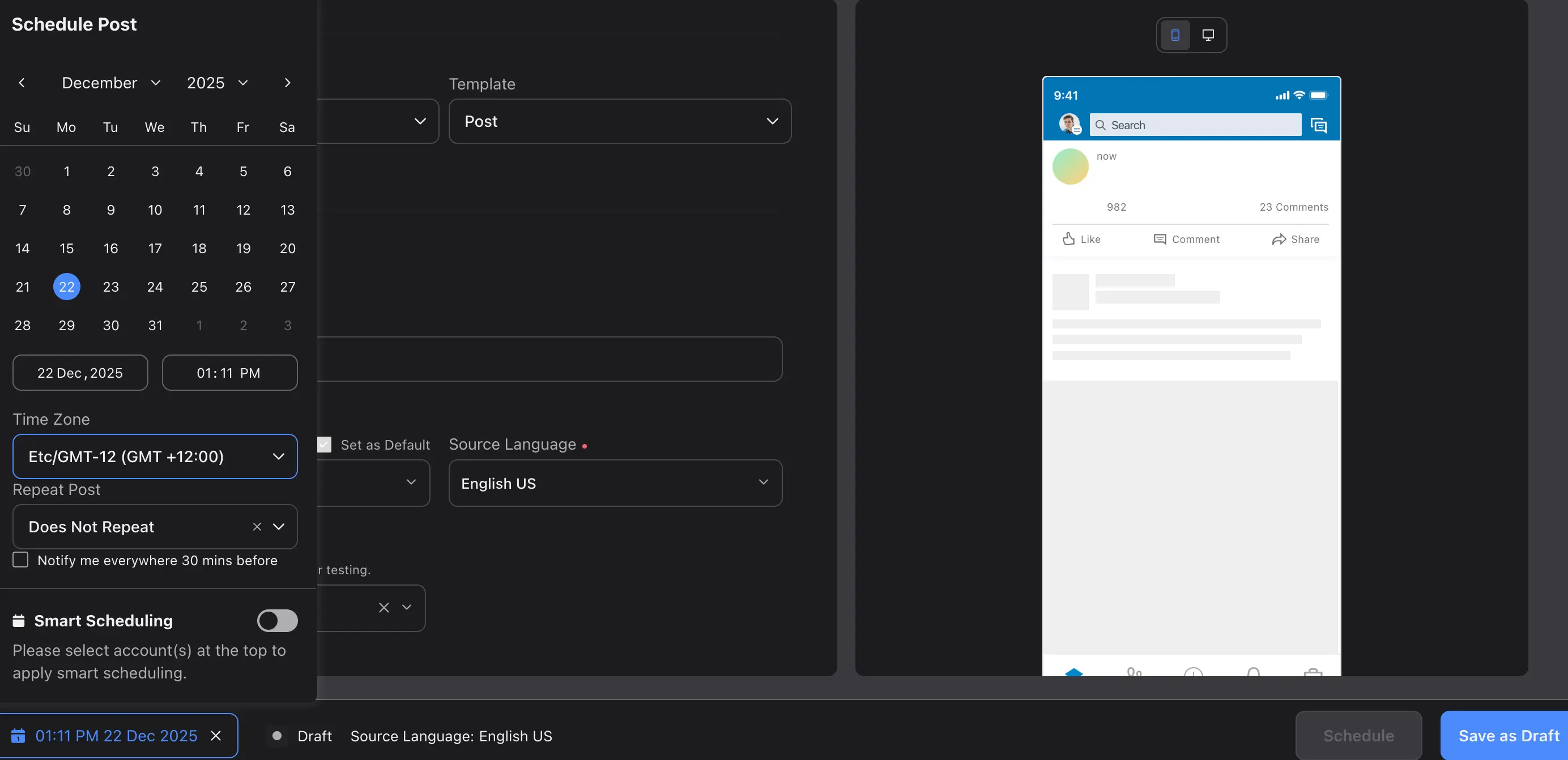
💡Pro Tip: Smart scheduling tools like Sprinklr’s can analyze historical engagement patterns by page, campaign, and region, then recommend optimal posting days. This allows teams to plan content more effectively, monitor performance in real time, and quickly reallocate slots when a new pattern emerges.
Keen to learn more?
Best times of day to post on LinkedIn in 2026
For marketers managing multiple regions, posting windows differ meaningfully across time zones and audience clusters. In a feed crowded with brand updates, only data-backed scheduling powered by audience analytics and real-time signals can reliably place your post in front of the right people at the right moment.
Below is a day-by-day view you can use as a starting grid for 2026 to help plan your content calendar for social media strategically and align publishing with peak engagement periods across regions. Treat these as testable baselines, then refine based on your own LinkedIn and cross-channel analytics.
Best times to post on LinkedIn on Monday
Best posting times:
8 AM to 11 AM
2 PM to 4 PM
Mondays bring a surge of professional activity. People return from weekends, clear emails, and scroll through LinkedIn for updates, opportunities, or motivational posts.
Works best for: Week‑start leadership notes, priorities, and project kick‑offs — keep it concise and actionable.
Regional note: UK/Western Europe lunch/early‑afternoon slots perform better than early mornings; test 1–3 PM.
Industry insight: Ideal for tech, finance, and consulting professionals who plan their week and review critical information on Monday mornings.
For example, L&T Technology posts its series Good News in Tech every Monday, aligning with its tech audience.
Regional note: In Europe, evenings (7 to 9 PM CET) work better; professionals check updates post-dinner while planning the week.
Learn more on LinkedIn Marketing Strategies!
Best times to post on LinkedIn on Tuesday
Best posting times:
6 AM to 12 PM
Engagement is highest as professionals shift from Monday planning to action mode. Users are more responsive to industry insights and job-related discussions.
Content to prioritize: Data‑backed posts (charts, PDFs), polls, program updates.
Industry insight: Marketing, SaaS, HR often see strong responsiveness as execution kicks in. (Use your analytics to confirm.)
For example, Deloitte often posts informative content such as blogs, infographics etc. on their LinkedIn during the beginning of the week, which gains traction.
Regional note: In Asia-Pacific, posting mid-morning (around 9 AM to 11 AM local time) often aligns well with workday starts and pre-meeting browsing.
Best times to post on LinkedIn on Wednesday
Best posting times:
12 PM to 2 PM
This happens because of midweek energy peaks. Professionals take lunch breaks and browse LinkedIn for insights, trends, and peer discussions.
Content to prioritize: Thought‑leadership and expert commentary; mid‑week is ideal for educational formats.
Industry insight: Wednesday offers the best LinkedIn posting timings for education, healthcare and IT professionals who use midweek to network and learn.
For example, Cigna Healthcare regularly posts midweek about informative healthcare guides that educate their audience about wellness trends and preventive care.
Regional note: In Europe, late afternoon (4 PM to 6 PM CET) can perform well as professionals review discussions and industry news before sign-off.
This mid-week focus brings us to a key strategic goal: executive visibility. When’s the best time to post executive thought-leadership content on LinkedIn, so it actually gets seen?
For executives seeking visibility among decision-makers and peers, mid-morning (10 AM to 11 AM) Tuesday through Thursday is a strong starting point. This aligns with peak professional browsing windows when strategic content is most likely to be discovered and engaged with.
Best times to post on LinkedIn on Thursday
Best posting times:
10 AM to 2 PM
Content to prioritize: Case studies, product demos, wrap‑ups with next‑step prompts.
Industry insight: Marketing, media, and HR sectors shine on Thursdays. It is ideal for brand storytelling and employee advocacy content.
For example, Warner Bros. Impact Day posts highlight employee volunteer efforts and community initiatives, driving both internal pride and external engagement.
Regional note: In the UK, engagement peaks around 1 to 3 PM as professionals browse during late lunch or pre-meeting breaks.
Also Read: 9 Key LinkedIn Metrics to Track for Your Marketing Strategy
Best times to post on LinkedIn on Friday
Best posting times:
8 AM to 10 AM
1 PM to 2 PM
On Fridays, audiences engage before winding down for the weekend, and the tone is lighter. Users are open to reflective, people-centric posts.
What you can post:
- End-of-week reflections, such as key lessons, wins or highlights that inspire your network and encourage conversation.
- Career growth tips, thought-provoking polls or team celebrations, leveraging the relaxed Friday mindset to foster engagement.
- Visual storytelling or recap videos to summarize your brand’s week; these perform well as audiences prefer bite-sized, feel-good content going into the weekend.
Industry insight: Creative, lifestyle and HR industries benefit from Friday’s relaxed tone, ideal for culture storytelling or employee shoutouts.
Regional note: In some Middle Eastern markets where Fridays align with the weekend, earlier slots (pre-8 AM local) can capture attention before people disconnect.
Best times to post on LinkedIn on Saturday
Best posting times:
5 AM to 6 AM
Saturday is not a primary posting day for many enterprises, but it can be useful for always-on talent, coaching, or community narratives. Professionals who check LinkedIn early often use it for light reading and reflection.
What can you post?
- Inspirational career journeys or personal development stories that align with weekend reflection. This kind of storytelling strengthens employer branding by showcasing authentic voices and company culture across global teams.
- Industry book recommendations or short thought pieces to maintain low-pressure engagement.
Industry insight: Coaching, education and wellness industries perform best, as audiences are reflective and planning personal improvement.
For example, a career coach sharing a simple “Saturday Reflection” visual quote connects deeply with weekend scrollers.
Regional note: In Asia, posting midmorning (8 to 10 AM local) captures early risers and entrepreneurs starting their day.
Best times to post on LinkedIn on Sunday
Best posting times:
Around 6 AM
Users prepare mentally for the new workweek. Engagement peaks among professionals reviewing content while planning Monday goals.
What you can post:
- Weekly recaps, upcoming event announcements, or planning tips.
- Motivational or leadership reflections that set a positive tone for Monday.
- Newsletters with long-form insights that audiences have time to read.
Industry insight: Effective for coaching, HR and lifestyle brands prepping audiences for the week ahead.
For example, LinkedIn’s “Sunday Read” newsletters show consistent engagement during these hours.
Regional note: In Europe, posting at 7 to 8 PM CET aligns with pre-Monday reflection, an excellent time for planning-oriented content.
So, what is the best time to post on LinkedIn?
If you’re still unsure, a safe and data-backed baseline is:
Tuesdays through Thursdays, between ~10:00 AM and 12:00 PM (local time).
Another question that always surfaces: What is the ideal posting time for formats like videos and carousels?
Both perform well in mid‑morning (~10–11 AM local); video also benefits from lunch hours (12–1 PM) when users have time to watch. Carousels (PDFs) drive strong engagement when professionals browse mid‑day and can swipe through slides. Company Page benchmarks show multi‑image/doc posts slightly edge video on average engagement; still, both are top‑tier and should anchor your cadence.
Frequency and consistency for LinkedIn posting
If timing determines initial visibility, consistency builds lasting audience presence. LinkedIn's algorithm favors accounts that post regularly and sustain engagement. For Company Pages in 2026, start with ~3 posts per week, spaced ≥24 hours apart, then scale to 4–5 only if engagement sustains. Over‑posting fragments impressions and dilutes velocity.
Here’s what you can follow:
- Videos: Post 3 to 5 times per week to engage audiences with dynamic, informative content.
- Images: Share 1 to 4 times per week to maintain visual presence and support other content types.
- Carousels: Upload 4 to 5 times per month as documents/PDFs, with one image per page to encourage in-depth engagement.
Overall, brands should post between 2 to 5 posts a week.
The risk of over-posting: Excessive frequency can lead to audience fatigue and cause the algorithm to distribute impressions too thinly. Prioritize high-value content over quantity.
Related watch: Improving CX with AI: The 3M Success Story
Leveraging LinkedIn Analytics to fine-tune timing
LinkedIn’s native analytics dashboard gives teams actionable metrics like impressions, engagement rate, and click patterns by day and hour. But for enterprise scale — multiple regions, segments, and content types; this often isn’t enough.
For example, analyzing engagement by hour or day can reveal trends such as higher engagement on Tuesdays and Thursdays mid-morning, early evening clicks for HR or recruitment posts and peak performance for carousels midweek versus videos or thought-leadership content early in the week.
❓ Recruiters often ask: When’s the best time to post on LinkedIn for a recruitment push?
Recruitment posts perform best between 10 AM and 2 PM, Tuesday through Thursday. That’s when professionals are in planning mode — checking industry news, networking, and exploring career moves. Keep it conversational and specific; people engage more when a post reads like an opportunity, not a generic ad.
Why native analytics fall short: For enterprise-scale teams managing multiple pages and markets, native analytics often lack the depth and flexibility required to optimize data-backed engagement maps. Aggregating insights across regions, industries, and content types or competitors is difficult without additional tools.
AI-powered analytics platforms like Sprinklr Insights enable you to:
- Aggregate data across multiple pages and regions
- Benchmark performance against competitors
- Use AI modeling to predict optimal future posting windows
This leads to an essential tactical question: Can AI truly predict the best time to post better than static rules?
It can, and it already does. Platforms like Sprinklr Social analyze millions of engagement signals — when your audience is active, how quickly they respond, and what devices they use; to pinpoint exactly when your content will land best. The timing isn’t fixed; it evolves with your audience. For global teams managing multiple regions, that shift from “best guess” to real-time precision is what keeps content consistently visible.
💡Pro Tip: You can start with Tue–Thu, 8–2 PM (local). Segment views by region, role, and industry; track impressions, engagement rate, click‑through, and dwell by hour/day. Pick the top 3 hours per segment based on impressions → engagement conversion (not just raw impressions).
Iterative testing beats fixed rules. Recompute quarterly; formats evolve (carousels/docs & video remain strong, polls drive reach).
Learn More: 9 Key LinkedIn Metrics to Use in Your Marketing Strategy
Final takeaway
Forget the old, rigid schedules. The best time to post on LinkedIn in 2026 is the moment your audience is most ready to listen. The data gives us a clear signal: aim for Tuesday through Thursday, 10 AM to noon, then get smarter from there.
Your real advantage comes from treating timing as a live variable, not a fixed rule. Use your analytics to watch, learn, and adapt. Let AI tools handle the cross-timezone math, so you can focus on what matters: creating content that actually connects.
In the end, perfect timing is just the amplifier. It makes great content heard. Don’t just post at the right time; post the right thing for that time.
See how Sprinklr Social turns timing into your silent growth engine! 👇
Frequently Asked Questions
For most B2B brands, midweek, Tuesday to Thursday, between 10 AM and 11 AM or around 1 PM to 2 PM local time tends to drive the highest engagement. Testing your audience’s behavior is still essential, as niche industries or regions may show slight variations.
Generally, yes. Engagement drops on Saturdays and Sundays because professionals are less active. That said, weekend posting can still work for light, reflective, or employer-branding content aimed at executives who browse more casually.
A good benchmark is 2 to 5 posts per week. Consistency matters more than quantity — maintain a regular cadence of high-quality, relevant content to sustain engagement and maximize algorithmic reach while avoiding audience fatigue.
Yes. Video posts often perform best midweek during mid-morning windows, while long-form articles or thought-leadership pieces tend to gain traction earlier in the week when professionals are planning projects and scanning for insights.
Sprinklr Social uses AI-driven analytics to track engagement trends, benchmark performance against competitors, and suggest optimal posting windows. With Smart Scheduler, it automates publishing at the best times and maintains a consistent, data-backed cadence across teams and regions.