



The global leader in enterprise social media management
For over a decade, Sprinklr Social has helped the world’s biggest brands reimagine social media as a growth driver with a unified platform, industry-leading AI and enterprise-grade scale.



How to Build a Brand Community that Engages

Every high-performing brand today has more than customers — it has a community. A brand community is a space (digital, physical or hybrid) where people connect around your brand’s purpose and each other. For enterprise brands, that connection turns into strategic momentum: increased advocacy, faster customer insight, and stronger resilience in shifting markets.
This guide shows how to design and scale a brand community that drives both engagement and business impact. You’ll learn how to define your community’s role in your strategy, follow six practical steps to design and scale it effectively, and apply strategies to sustain meaningful participation over time. By the end, you’ll understand how a well-designed brand community can help your customers feel seen and heard and give your business a competitive edge.
Why does building a brand community matter?
Most brands say they want “engagement.” What they really need is leverage — better data, faster insight, more loyalty, lower support costs and a customer base that sticks even when markets shift. A brand community delivers exactly that.
Done well, a community becomes an extension of your operating model, not a side project. It improves how you learn, how you build, how you support, and how you retain.
Four strategic purposes your community can serve:
- Support: Members help each other solve problems, reducing reliance on customer service while increasing satisfaction.
- Knowledge-sharing: Peer-to-peer learning and shared best practices turn members into co-creators of value rather than passive participants.
- Co-creation: Source real-world product feedback, beta test new features, and involve your most valuable customers in shaping your roadmap.
- Lifestyle connection: Shared identities, values and experiences drive emotional loyalty, making customers advocates instead of just buyers.
The business impact of a purposeful community is significant. Members spend about 19% more than non-members, nearly 70% of consumers say they feel more connected to brands through dedicated communities than through social media, and owned communities can cut support costs through peer-to-peer help at a time when retaining a customer is still five to seven times cheaper than acquiring a new one.
Building a brand community effectively can scale trust and knowledge and accelerate innovation, all while delivering tangible results that justify strategic investment. Let’s learn how.
6 steps to building a brand community for your business
Engaged communities don’t happen by accident — they’re architected. Use these six steps to create and scale a community that delivers value both to members and to your business.
1. Choose the right platform for your audience
The platform you select shapes how your members interact, and whether the interaction is sustainable. It dictates the community's reach, depth, and data ownership. You must match the platform to audience behavior and brand goals while mitigating risks.
- Social groups (Facebook, LinkedIn, Discord): Ideal for broad reach and top-of-funnel engagement. However, you sacrifice data control and are vulnerable to algorithm changes.
- Branded platforms: Tools like Circle or Mighty Networks provide more control over the member experience, but with more investment. It offers branded environments for deeper engagement, robust community moderation tools, and full data ownership, making them the core of most enterprise strategies.
- In-app integrations: Embedding communities directly into your product can strengthen engagement and connect discussions to real usage, making the community experience more relevant.
Know More: What are the best brand community tools in 2025?
Reach still matters — forums like Facebook Groups, Reddit, Telegram and Discord are viable for visibility. But brands today increasingly pair them with platforms like Sprinklr Social to engage, moderate and analyze across channels. Using Sprinklr, you can manage communities at scale, turn participation into insights and tie engagement to loyalty.
Risk reminder: Relying solely on third-party platforms leaves your community vulnerable to external changes — data access, algorithm shifts and visibility all drift beyond your control. Own your infrastructure or at least maintain owned data capture.
Interesting Read: 6 Major Social Media Algorithms Explained (+ Bonus Tips)
2. Establish strong community guidelines and culture
Culture is the operating system of your community. Clearly defined guidelines and a structured onboarding process set the tone for safety, inclusivity, and quality.
- Define norms: Explicitly outline acceptable behavior, content boundaries, and values to build a professional and respectful environment.
- Design structured onboarding: Use automated welcome messages and tutorial content to acclimate new members and immediately demonstrate value.
- Instill rituals: Introduce recurring events, recognition badges, or weekly discussion threads to create rhythm and reinforce community identity.
For example, subcommunities on Reddit thrive because they’ve established clear rules and rituals that drive identity and loyalty. By modelling governance, you’ll reduce moderation overhead and build a sustainable culture.
Good To Know: 8 Big Reddit Trends Brands & Marketers Must Know
Establishing culture early helps prevent conflict, guides member behavior and reduces moderation overhead. Tools like Sprinklr can monitor conversations for compliance and ensure your community guidelines are consistently applied across all channels, making it easier to scale while maintaining the desired culture.
3. Create content and conversations that spark engagement
Members don’t talk because the brand posts; they talk when you invite, facilitate and amplify meaningful exchanges. The goal is to shift from brand-led broadcasting to member-driven dialogue.
- Discussion threads: Pose open-ended questions that invite personal experience.
- AMAs (Ask Me Anything): Feature experts, product leads or community champions to answer questions live.
- Polls and surveys: Gather quantitative feedback while offering a low-barrier entry to participation.
- Live sessions or webinars: Build memorable, interactive experiences.
- User-generated content (UGC): Highlight member success stories to reinforce recognition.
Balance brand- vs member-led content:
Start with brand-led content to prompt and frame discussion (updates, questions, facilitation). Shift quickly to member-driven content — authentic stories, peer insight, shared feedback. Avoid overtly sales-heavy messages; members can sense when engagement is manufactured.
So, what are the most effective ways to spark ongoing conversation in a brand community?
Invite personal stories (“What’s your biggest challenge this quarter?”), use interactive formats (polls, live Q&A), recognize contributors, and respond time sensitive.
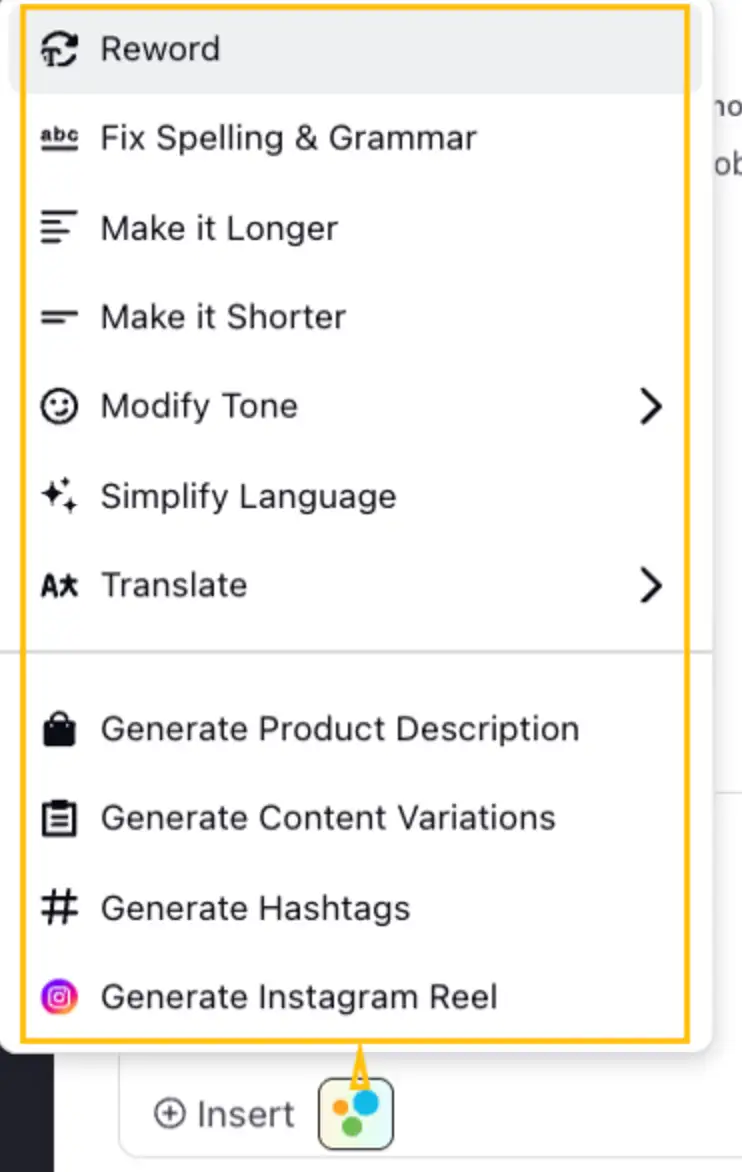
With Sprinklr AI+, you can generate conversation starters, speed up replies, and refine tone, helping maintain authentic, ongoing dialogue that keeps members engaged — all on the same platform.
Suggested read: How to gain high social media followers
4. Empower community champions and leaders
Sustainable communities are built on distributed leadership. Your champions and moderators act as force multipliers, extending your team's reach and credibility.
- Identify leaders: Find highly engaged members, consistent contributors, and early adopters.
- Recognize and reward: Use badges, spotlight posts, invite feedback, and provide perks or exclusive access to show appreciation.
- Equip moderators: Provide dashboards, guidelines and resources so they can run segments, initiate discussion, and enforce norms.
Take Notion as an example. The company scaled its user base by empowering power users as ambassadors, campus leaders, and event hosts. This recognition turned everyday users into champions who drive discussions and build loyalty.
How to use a brand community to turn passive customers into advocates?
The transition from passive member to active advocate is engineered. First, use community analytics to identify highly engaged members. Next, proactively invite them into a structured champions program that provides recognition, exclusive access, and influence. By empowering these members as leaders, you create social proof that influences the broader community, organically generating advocacy at scale.
To fully manage your community, you can try tools such as Sprinklr’s Community Builder. Administrators can create and fully customize online spaces, deploy recognition widgets (such as badges or leaderboards) and promote constructive discussion.
Learn More on Community-Based Marketing and Strategies to Reach Your Audience
5. Blend online and offline touchpoints
Communities feel stronger when digital interactions connect with real-world experiences. Hybrid models build deeper bonds and make virtual relationships more human.
- Flagship events/conferences: From large-scale annual conferences to intimate local meetups, provide opportunities for face-to-face connection — for learning, networking and brand immersion.
- Regional meetups/pop-ups: Personal connections reinforce loyalty by bringing the brand into their world.
- Virtual-to-physical campaigns: Design online campaigns that culminate in exclusive offline experiences or tangible rewards.
Figma demonstrates this well: its online design community expanded into Config, an annual in-person conference where designers meet, learn, and network. This hybrid approach deepened identity and advocacy beyond the product.
Design your community touchpoints as integrated journeys — from digital discussion to in-person forum and back again.
Also read: Social Media Community Management: A Starter Guide
6. Measure engagement and community health
To justify continued investment, you must link community activity to business outcomes. Move beyond vanity metrics to a balanced scorecard.
Key metrics to track:
- Participation rate: % of members who actively contribute versus passive membership.
- Retention rate: How many members stay engaged over time.
- Content activity: Posts/comments per member identifies your core contributors.
- Referrals/invites: Organic growth driven by social media advocacy plan.
- Sentiment analysis: Tone of discussions (positive, neutral, negative) and member stories.
The most effective measurement blends hard data (who’s active, who’s staying, how much they’re contributing) with human insights (how they feel, what they’re saying, why they care). Together, these metrics paint the clearest picture of whether your community is just active or truly thriving.
Fundamental read: Social Media Sentiment Analysis: An Enterprise-Level Framework
Pro Tip: How to centralize your community insights and increase customer satisfaction at the same time
To run a healthy and engaging brand community, it’s essential to have a clear view of participation, retention, and member engagement. Tracking these metrics helps community managers identify active contributors, uncover trends, and spot opportunities to support and recognize emerging champions.
Combining quantitative data with qualitative insights from member stories and sentiment ensures that strategies are both effective and meaningful, helping prove ROI and strengthen loyalty.
With Sprinklr Community Management, you can monitor dashboards in real time, track sentiment and link community activity to outcomes such as reduced support costs and higher advocacy.
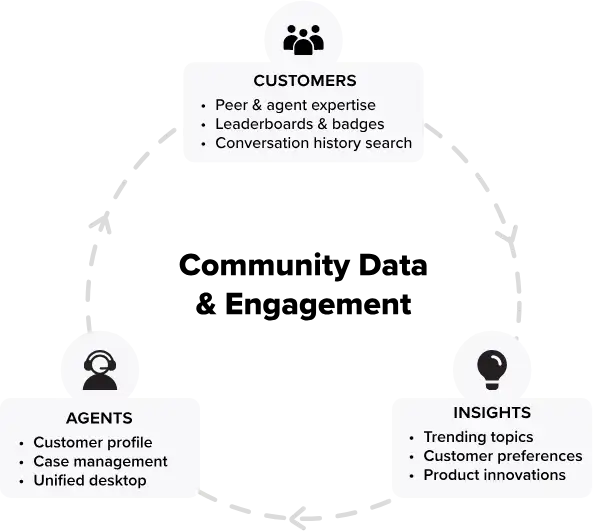
By following these 6 steps you turn your brand community into a strategic ecosystem of advocacy, knowledge and innovation — one where members feel valued, and your brand sees measurable growth.
Brand community examples in action
Here are real-world examples of how companies across different sectors built strong, purpose-driven communities; demonstrating how connection + shared experience fuel loyalty and growth.
1. Be the Match
Faced with a sudden surge — inbound messages increased ~778%; the donor-registry organization had to scale fast. Using Sprinklr, the team streamlined social media engagement, automated workflows, and deployed custom dashboards.
The result: 14,000 new donor registrations in one year and stronger trust across its donor community.
2. Oura Community
Oura, the smart ring brand, built a wellness-focused online community where users share their stories related to sleep, recovery and health. It also features expert AMAs and clear peer-support guidelines, turning data-sharing into advocacy.
3. Calm Collective
Calm, the meditation app, launched Daily Calm Community, a Facebook group where users join themed groups (sleep, anxiety, mindfulness) and share experiences.
The Daily Calm Community is a Facebook group where members discuss mindfulness practices and reflect on Daily Calm meditations. It’s designed as a supportive, inspiring space that builds awareness, equanimity, and connection through shared practice.
4. Therabody
Therabody launched its community on TYB (Try Your Best), a platform where members can take on challenges, share feedback and unlock rewards. More than just a loyalty program, it’s positioned as a hub that celebrates the people who inspire the brand every day.
By combining feedback loops with tangible incentives, Therabody has built a community that doesn’t just consume products but actively shapes the brand experience while deepening emotional loyalty.
Understand the Role of Emotional Intelligence in Customer Experience
5. Newegg
Newegg launched the Newegg Gamer Community in 2025, a digital hub on its site and app where gamers, DIY builders and tech enthusiasts can discuss trends, showcase custom PC builds, get troubleshooting help, and interact directly with Newegg staff. By moving beyond transactions into conversation, Newegg positioned itself as the center of PC gaming culture.
6. Starbucks Odyssey
Starbucks Odyssey (beta launched late 2022 in the U.S.) created a community around its Web3 loyalty experience. Members earn “journey stamps” through interactive challenges, join exclusive discussions, and unlock access to unique events and rewards.
By blending gamification with exclusive engagement, Starbucks turned loyalty members into a connected community that influences the future of its rewards ecosystem.
Here are Types and Tips to Start Strong on a Customer Loyalty Program
Set growth in motion with an engaging community
The true power of a brand community isn’t in how many people join; it’s in how it strengthens the connection between your customers and your business. When built with purpose, community becomes a real business asset: it fuels retention, lowers support costs, and delivers continuous customer insight that marketing campaigns alone can’t produce.
As Steve Jobs once said, “Great things are never done by one person. They’re done by a team of people.” That’s what a brand community really is — a collective effort between your customers and your company to create shared success.
Sprinklr Social helps enterprises make that collaboration real. It unifies community engagement across social channels, from X to LinkedIn to Reddit, giving teams one AI-powered platform to listen, engage, and respond at scale. Brands can identify community conversations in real time, join them authentically, and turn social followers into loyal advocates.
Every interaction becomes intelligence: insights to improve campaigns, guide product decisions, and strengthen customer trust. For leaders, Sprinklr Social delivers clarity — a unified view of sentiment, engagement, and advocacy across all social touchpoints.
When managed with intent, a brand community isn’t just another audience. It’s an active ecosystem where loyalty compounds, insights accelerate, and growth begins.
See how Sprinklr makes that possible. ⬇️
Frequently Asked Questions
A brand audience includes people who consume your content or products, often passively. A brand community, by contrast, actively engages — members share experiences, exchange insights, and build relationships around shared values and the brand itself. This sense of belonging drives loyalty and advocacy.
Building a thriving community is a strategic, long-term process; typically taking several months to a few years. Engagement grows steadily when you consistently deliver value, nurture participation, and empower members to take ownership of discussions and initiatives.
It depends on your goals and audience behavior. Social platforms offer reach and accessibility, while standalone hubs provide greater control, data ownership, and customization; allowing enterprises to scale engagement securely and sustainably.
Track both quantitative metrics (retention, referrals, engagement rates) and qualitative insights (member sentiment, testimonials, feedback themes). Together, these reveal how your community strengthens loyalty, advocacy, and overall brand perception over time.
Re-engagement requires a mix of fresh content, targeted initiatives, and public recognition. Launch new discussions, polls, or events that invite participation, spotlight contributors, and give members clear reasons to reconnect and stay involved.

