





Transform CX with AI at the core of every interaction
Unify fragmented interactions across 30+ voice, social and digital channels with an AI-native customer experience platform. Deliver consistent, extraordinary brand experiences at scale.




Customer Experience Journey: Stages, Maps & Best Practices
Aksheeta Tyagi is an experienced content marketer specializing in customer service, customer experience, contact center technology and AI-powered customer support. She writes in-depth guides on customer feedback management, conversational AI, agentic AI and enterprise service transformation to help businesses deliver better customer experiences at scale.
Key takeaways
- The customer experience journey is the full sequence of interactions a customer has with a brand across every channel.
- Customers judge a brand on the whole journey, so it needs managing end to end rather than touchpoint by touchpoint.
- A journey map is a starting point, and live journey data is what keeps it accurate and actionable.
- Measure each journey with outcome, effort and sentiment signals together instead of relying on a single score.
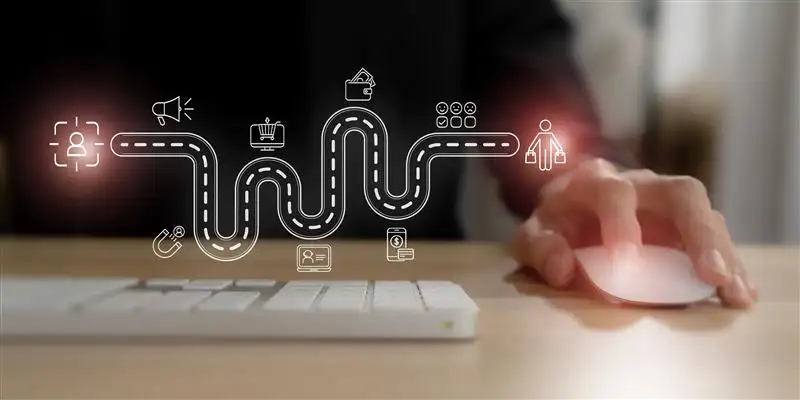
The customer experience journey is the complete sequence of touchpoints and interactions a customer has with a brand from initial awareness through consideration, purchase, onboarding, support, renewal and advocacy. It covers every channel the customer uses along the way, rarely moving in a straight line because they skip stages, switch channels and come back to earlier ones as their needs change.
Consider a multichannel customer experience journey for a retail brand. A customer might first encounter the brand through an online ad, proceed to explore products on the website, seek advice from a live chat agent, visit a physical store for an offline experience, make a purchase via a mobile app and later receive follow-ups and check-ins via email or SMS. Each of those moments can go well on its own, yet the customer judges the brand on how smoothly the whole sequence holds together.
Mapping the customer experience journey is a collaborative effort that involves every team that owns a part of it, from marketing and sales to customer service and product development. It requires a deep understanding of customer needs, pain points and behaviors, which is why the strongest journey work draws on market research, interaction data and customer feedback together rather than relying on any one of them.
- Why the customer experience journey matters
- Differences between customer experience journey and customer experience
- Stages of the customer experience journey
- How to build a customer experience journey map
- How to measure the customer experience journey
- From journey maps to journey orchestration
- How to improve the customer experience journey
- How Sprinklr helps you manage the customer experience journey
Why the customer experience journey matters
Building a well-defined customer experience journey map provides executives with a strategic roadmap, optimizing the customer touchpoints that shape brand perception, drive purchase decisions and ultimately influence profitability.
Most companies are organized around touchpoints, with one team owning the website, another the contact center and another billing, and each team optimizes its own piece. Customers don't experience a brand that way, because they move through all of those pieces to get one thing done. McKinsey's research even found that in most industries, the three journeys customers care about most account for more than 25% of total customer satisfaction, and that performance on journeys is more strongly correlated with revenue, churn and repeat purchase than performance on individual touchpoints. That's the practical case for managing the customer experience journey as a single experience rather than a series of handoffs.
1. Loyalty and advocacy: A positive customer experience journey that holds together from first contact to renewal fosters customer loyalty and brand advocacy, translating into higher customer lifetime value and word-of-mouth marketing. Conversely, when a journey breaks, the damage rarely traces back to one bad interaction. In the same research, McKinsey found that most frustrated customers weren't upset about any single call or service visit but about the cumulative effect of several interactions that each looked fine on their own.
2. Operational efficiency: Mapping the journey exposes inefficiencies across departments, revealing opportunities for operational streamlining and cost reduction. A customer who has to call back because an order change never reached fulfillment creates a second contact, a longer handle time and an agent who inherits the frustration, so fixing that handoff removes cost that no single team's metrics would surface on their own.
3. Data-driven decision-making: Client experience journey maps serve as living documents when they're fed by customer surveys, interaction data and feedback on an ongoing basis, which gives marketing, service and product teams a shared view of where customers struggle and which fixes will matter most.
Differences between customer experience journey and customer experience
The terms customer journey and customer experience journey are generally used interchangeably, and both describe the path a customer takes rather than how they feel about it. Customer experience, often expressed as positive, negative or neutral, is the outcome of the customer experience journey. Here's how they differ:
Aspect | Customer Experience (CX) | Customer Experience Journey (CX Journey) |
Definition | Overall perception of customer interactions with a brand | Specific sequence of interactions with a brand across stages and channels |
Scope and focus | Broadly, encompasses all customer interactions with the brand, including products, services and overall brand perception | Focuses on mapping out and optimizing each stage of the customer's journey, from initial awareness to post-purchase activities |
Timeframe | An ongoing, holistic concept that considers the entire lifespan of the customer-brand relationship | Typically refers to a specific scenario, such as making a purchase or seeking customer support, and often loops back or jumps between stages rather than following a straight line |
Depth of analysis | Overall perception, satisfaction, loyalty | Specific touchpoints and interactions within stages |
Strategic importance | Critical for building strong brand loyalty, increasing customer retention and driving business growth | Essential for understanding and optimizing the customer experience at each stage of the journey |
Key metrics | Net Promoter Score, CSAT, retention rates and customer lifetime value | Conversion rates, abandonment rates, customer effort score at key steps and customer journey completion rates |
Bonus Read: Customer Experience Optimization – All You Need to Know
Stages of the customer experience journey
While specific models may vary, a customer experience journey typically unfolds through five distinct stages. To show how the stages connect, the examples below follow one buyer, the head of customer service at a mid-sized retailer who is evaluating a new customer service platform, from first contact through renewal.
Awareness
The first stage is the awareness stage, which aims to build brand awareness of your products or services among potential customers.
For instance, the head of customer service, facing rising contact volumes after a busy holiday season, might first come across your platform through a sponsored LinkedIn post or a recommendation from a colleague. Nothing is being evaluated yet, so what matters here is whether your content speaks to the problem they already feel.
Consideration
This stage is where potential customers are interested in purchasing but still evaluate their choices. They're seeking confirmation that your solution addresses the precise issue that prompted their search. This is an essential stage in the client experience journey since purchasers need to understand why they should buy.
Our service leader builds a shortlist, reads analyst reports and peer reviews, sits through a few product webinars and asks their IT team which platforms will integrate with the existing CRM. The questions they bring to your website and sales team at this stage are specific, and slow or generic answers push them toward the next vendor on the list.
Decision
During the decision stage, customers are more likely to make a purchase as they have done most of their research and have a clear understanding of the problem and the ideal solution. This stage involves consultations with sales representatives, product demos or trials. The customers decide to engage with your brand through a purchase, subscription or contract agreement. For our service leader, that means a proof of concept on real contact data, a security review and a commercial negotiation, and friction in any of those steps can stall a deal that was otherwise won.
Post-purchase (onboarding and support)
During the post-purchase stage, customers expect onboarding that gets them to value quickly and support that resolves issues without making them repeat themselves. This is where most of the journey's interactions happen, and for customer experience leaders it covers implementation, agent training and every support ticket their team raises in the first year. How those moments go decides whether the renewal conversation is easy or difficult.
Loyalty and advocacy
In the loyalty stage, customers continue to use the product or service and may opt for more services or upgrade their subscription plan. For instance, a coffee enthusiast who regularly chooses a specialty brand and is impressed with premium blends and exceptional customer service may become an advocate on social media, recommend the brand to others and actively participate in loyalty programs.
Must Read: Social Media Advocacy: Strategy and Best Practices
How to build a customer experience journey map
Customer journey mapping allows you to see the journey from the customer's side, including what they're trying to do at each stage, where they get stuck and how they feel about it.
To build an accurate client experience journey map, capturing all customer touchpoints across all platforms and contact center channels is essential. Most teams start with a current-state map of how the journey works today and later build a future-state map of how it should work once the fixes are in place. Here is a step-by-step guide to mapping the consumer experience journey, and our customer journey mapping guide covers the process in more depth:
Step #1: Define clear objectives
Start by defining specific goals for your customer experience journey map and choosing which journey it covers, since a map of first-time purchase and a map of renewal will look very different. Determine what action you want your customer to take at each stage: whether that's starting a free trial, completing onboarding or renewing a contract.
Step #2: Identify customer personas
Conduct market research, gather customer feedback and create detailed buyer personas to identify their preferences, pain points and motivations. By gaining insights into their demographics, behavior and psychographics, you can tailor the journey to meet their specific needs and expectations.
Step #3: Gather customer intelligence
Pull together website traffic, purchase data, customer engagement metrics and contact center interaction data to map customers’ behavioral patterns. Bringing these sources into a unified customer experience platform deepens your understanding of their thoughts, feelings and actions at each touchpoint.
Step #4: Chart touchpoints
Map out every digital and physical interaction across customer touchpoints, including website visits, social media engagement, email communication, phone calls, in-store experiences, product demonstrations and customer support interactions. Determine where and how customers engage with your brand. Then arrange the touchpoints in the order customers typically encounter them, allowing for the different entry points and detours that real journeys take.
Step #5: Add emotional context
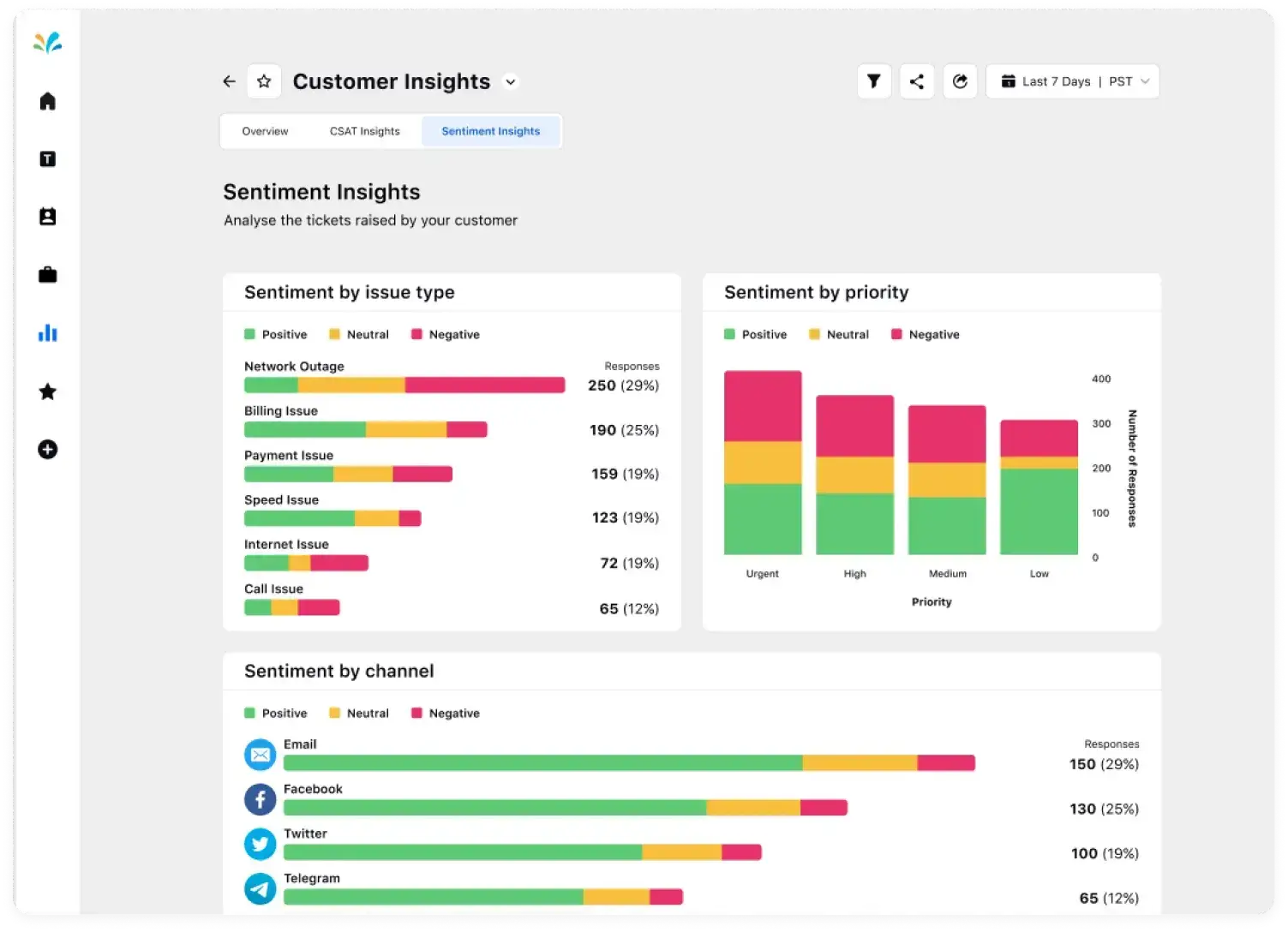
Try to capture your customers' feelings at each touchpoint based on their actions. Account for emotions they relay through the customer experience journey via surveys, chats and calls. Positive or negative sentiments in these moments directly impact their purchase decisions.
Customer experience journey mapping tools with built-in omnichannel sentiment analysis capabilities help you quantify and visualize customer emotions throughout the journey. By tracking changes in emotional engagement levels over time, you can assess the impact of your customer experience efforts and adjust as needed.
Step #6: Identify pain points and prioritize fixes
As you map out the customer journey, identify potential pain points, bottlenecks and opportunities for improvement. These could be areas where customers experience frustration, confusion or dissatisfaction or where opportunities exist to exceed expectations and delight customers. Pay attention to moments of truth, the touchpoints that carry the most weight in how customers judge the whole customer experience journey. Then rank the fixes by how much they would improve the journey against the effort each one takes. This may involve improving website navigation, streamlining checkout processes, training contact center agents or launching targeted marketing campaigns.
Step #7: Validate and iterate
Once you've created a draft of the customer experience journey map, validate it by gathering feedback from stakeholders, including employees, customers and partners. Use qualitative and quantitative research methods, such as surveys, interviews, usability testing and journey mapping workshops, to gather insights and validate assumptions. Iterate on the customer experience map based on feedback, making adjustments and refinements as needed to ensure its accuracy and effectiveness. A map that nobody revisits stops matching the real journey as channels and products change, so plan to refresh it against live data rather than treating it as a one-off deliverable.
How to measure the customer experience journey
Journey-level measurement answers a different question than a post-interaction survey. A CSAT score after a single chat tells you how that chat went, while a journey view tells you whether the customer got what they came for across every step it took. McKinsey recommends measuring customer experience at the journey level rather than at individual touchpoints or through one overall satisfaction score, and its research found that health insurance customers were 73 percent more likely to be satisfied when the whole journey worked well than when only individual touchpoints did.
In practice, that means pairing outcome metrics such as journey completion, conversion and retention with effort metrics such as customer effort score and repeat contacts, then reading both alongside sentiment from surveys and conversations so the numbers come with an explanation. Journey completion rate shows how many customers finish a journey like onboarding or a return without dropping out, while repeat contact rate shows how often they have to come back about the same issue, which makes it one of the clearest signs of a broken handoff. Our guide to customer experience KPIs covers the wider set of metrics in more detail.
From journey maps to journey orchestration
A journey map is a snapshot of how the journey worked when the team built it. Gartner's research found that traditional journey maps fail to drive long-term impact, largely because the growth in service channels, the rise of multichannel journeys and siloed technology make journey insights hard to capture and analyze.
Customer journey analytics and orchestration tools are built to close that gap. Gartner defines them as solutions that track and analyze how customers interact with an organization across channels over time and then help prioritize and orchestrate real-time improvements across the customer life cycle, combining interaction data with transactional, voice of the customer and profile data on a single timeline.
For a CX team, the shift is from reviewing a map once a quarter to acting on the journey while it's in progress. If a customer abandons an online return and then opens a chat, an orchestrated journey gives the agent the full context of what already happened, and customer journey analytics shows the CX team how many other customers dropped out at that exact step. Getting there takes real integration work, since journey data usually sits in separate marketing, commerce and service systems that have to be connected before anything can be orchestrated.
How to improve the customer experience journey
Here are five actionable tips to help take your customer experience to the next level:
Embrace personalization with AI
Use AI-powered recommendation engines and dynamic content to tailor each touchpoint to what the customer has already done in the journey. A customer who opened the setup guide three times after purchase is a better candidate for a proactive onboarding call than for another upsell email.
How Sprinklr AI helps:
Sprinklr AI draws on customer preferences and behavior across channels to help teams build targeted audience strategies, bespoke content, personalized product recommendations and relevant promotions.

Adopt an omnichannel strategy
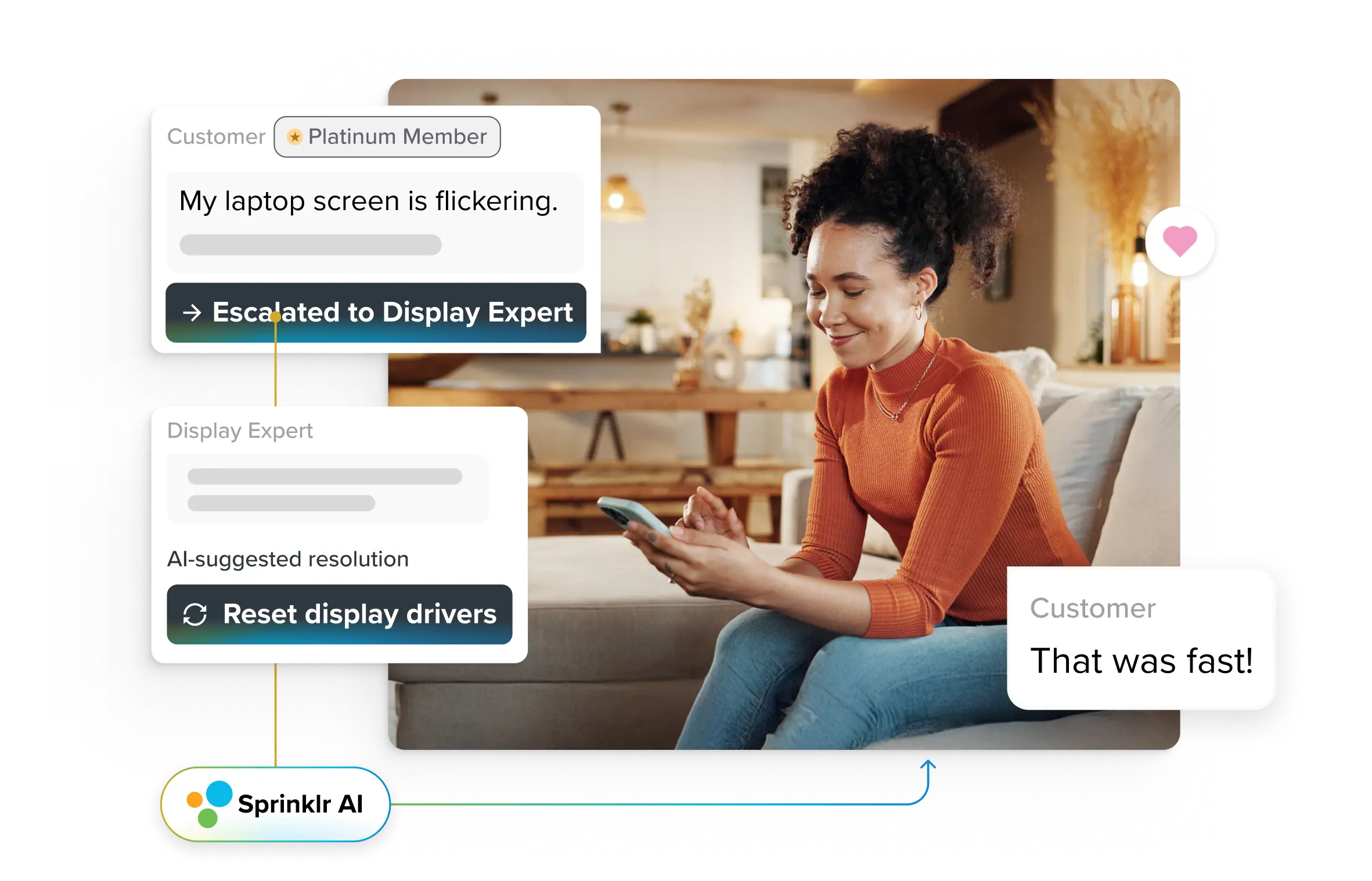
Customers rarely finish a journey in the channel where they started, so the service side of the journey needs an omnichannel customer service strategy. This means ensuring that conversations can smoothly transition between online, offline and mobile interactions. By using a unified platform that incorporates bots and intelligent routing, cases can be escalated to the right agents with complete context transfer, so the customer never has to explain the issue twice.
Good to know: With an omnichannel routing platform, you can streamline your workflows across channels. By using AI to match customers with the right agent based on their needs and history, you can deliver personalized and efficient service. Learn more about omnichannel routing.
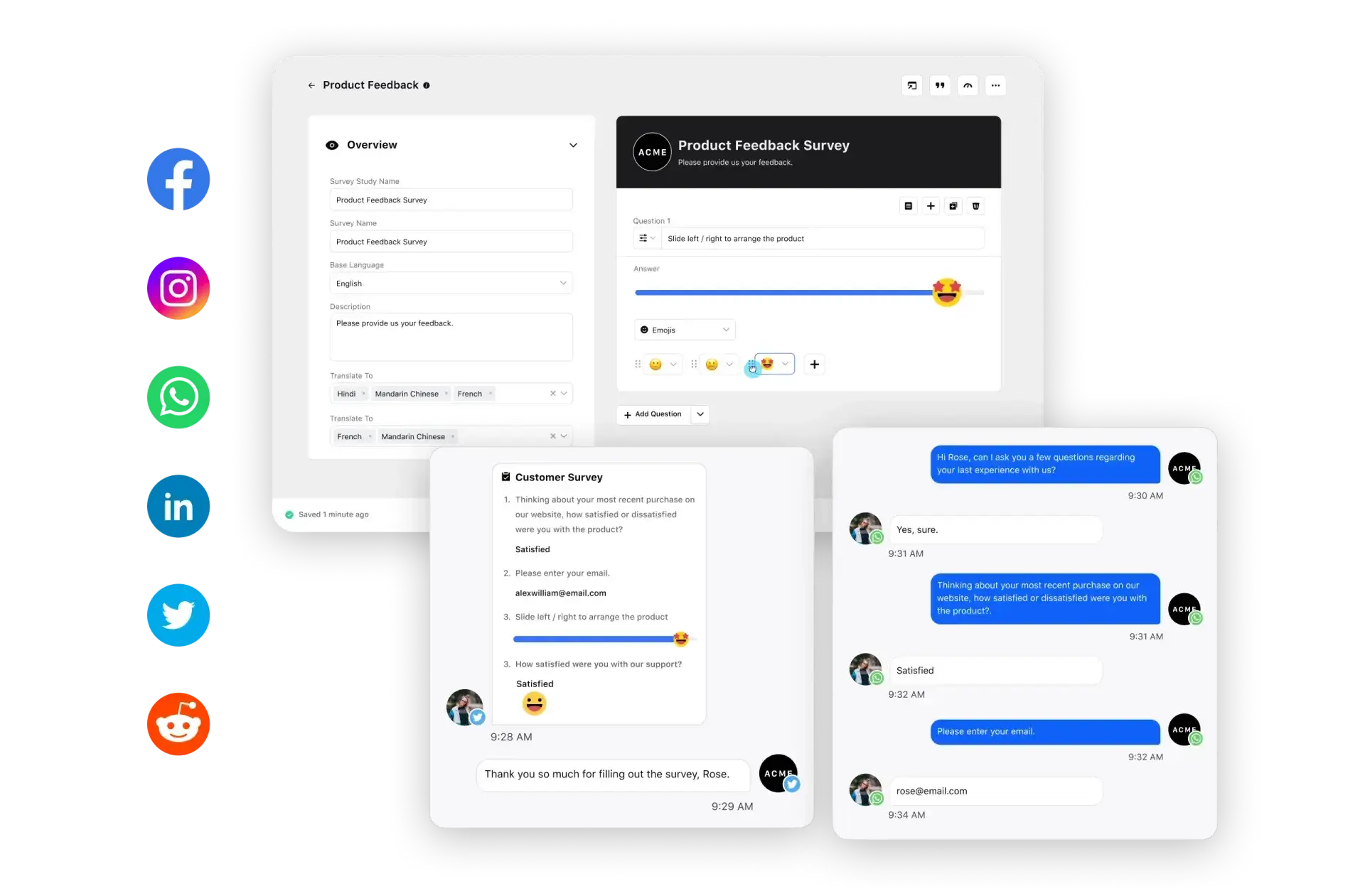
Let AI agents resolve routine requests on every channel
Deploy voice bots and conversational interfaces, including AI agents that can take action rather than only answer questions, to handle routine requests like order status, returns and account changes across voice and digital channels. The aim is to resolve those requests fully inside the journey and hand anything complex to a human agent with the whole conversation attached, so automation shortens the journey instead of adding a dead end to it.
Empower your employees as CX champions
Equip employees with the tools and training to deliver exceptional service at every touchpoint, starting with a single view of the customer's journey so an agent can see the web session, the abandoned return and the earlier chat before saying hello. The frontline teams who handle the journey every day are also the fastest source of evidence on where it breaks, so give them a direct route to flag recurring issues to the teams that can fix them.
How Sprinklr helps you manage the customer experience journey
While the client experience journey is where brands win or lose customers, most of the obstacles are structural, running from fragmented touchpoints and inconsistent messaging to service data locked in separate systems, which is why businesses often struggle to deliver a cohesive journey that customers expect.
Sprinklr, built on the world’s first Unified-CXM platform, addresses these challenges by bringing marketing, service and insights data into one place. By connecting every channel to the same customer record and layering AI agents, routing and sentiment analysis on top of it, Sprinklr helps you manage cohesive and consistent customer experience journeys at scale and act on them while they're still in progress.
To see how Sprinklr works, hit the button below and register for a personalized demo from our experts today.
Frequently Asked Questions
Most models use five stages: awareness, consideration, decision, post-purchase (covering onboarding and support) and loyalty. Real journeys rarely move through them in a fixed order, since customers often loop back to research or contact support before they buy.
In practice, yes. Both terms describe the full sequence of interactions a customer has with a brand. Customer experience is the related but separate idea, referring to how the customer feels about the brand as a result of that journey.
A customer journey map is a visual representation of the steps, touchpoints and emotions a customer goes through to complete a specific journey with a brand. Teams use it to find pain points and decide which fixes to prioritize.
Customer journey orchestration uses real-time journey data to decide and trigger the next best interaction for each customer across channels, rather than relying on a static map. Gartner groups these capabilities under customer journey analytics and orchestration.
Businesses can use AI to improve the customer experience journey in various ways, such as personalized recommendations, AI agents for customer support, predictive analytics for anticipating customer needs and sentiment analysis for understanding customer feedback. Journey orchestration adds a further layer by using that data to decide the next best action for each customer while the journey is still underway.
Aksheeta Tyagi is an experienced content marketer specializing in customer service, customer experience, contact center technology and AI-powered customer support. She writes in-depth guides on customer feedback management, conversational AI, agentic AI and enterprise service transformation to help businesses deliver better customer experiences at scale.