




The AI-native platform for global campaign management
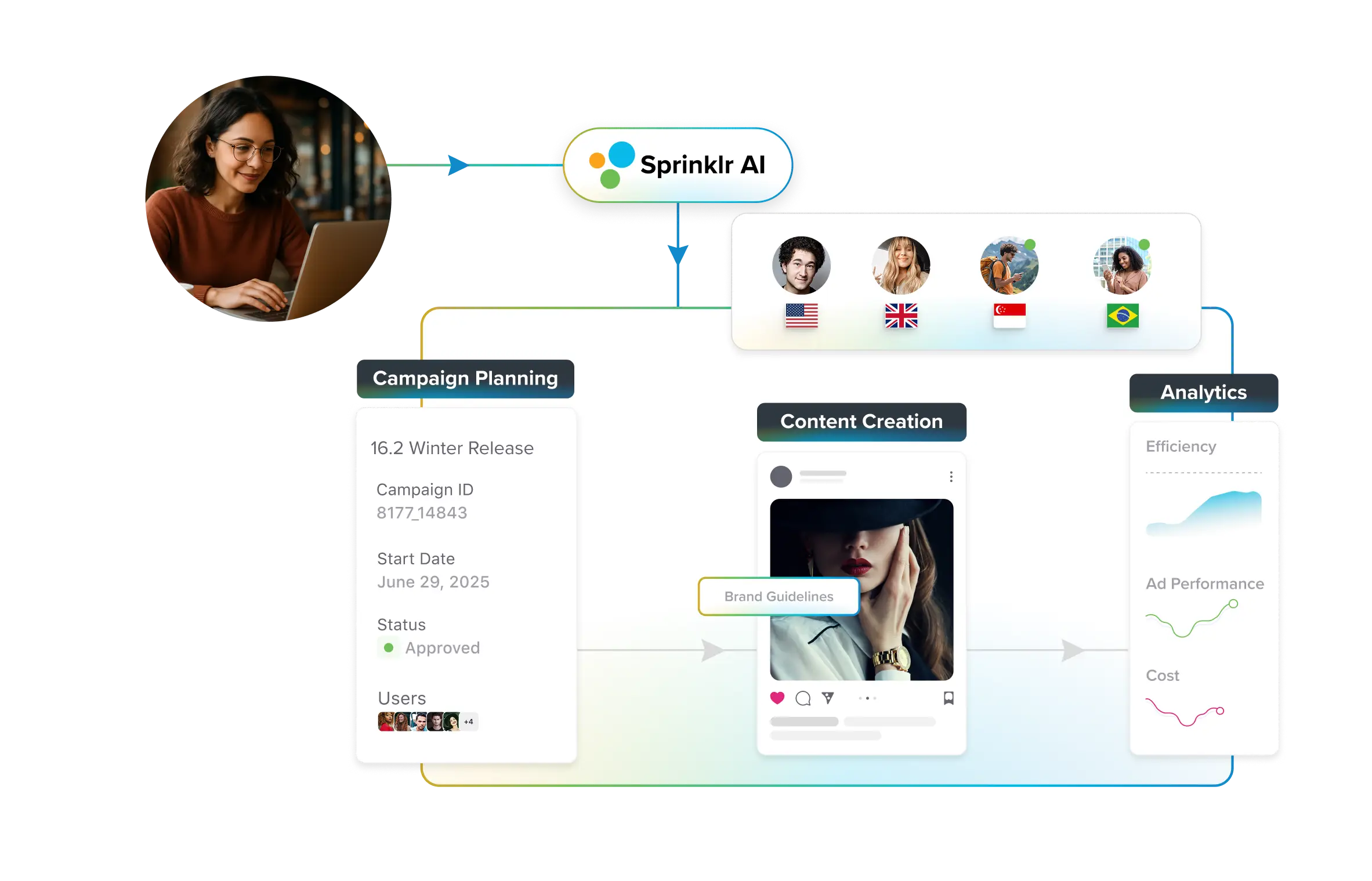
Sprinklr Marketing unifies campaign planning, content creation, publishing and analytics across global teams — all elevated by AI. Accelerate go-to-market, boost performance and enforce brand governance at scale.



How to Ensure Brand Compliance Across Channels
A brand is only as strong as it is consistent. Every logo, every line of copy, and every customer interaction is a promise, and audiences notice the moment one of them breaks. As channels multiply and AI accelerates how fast content ships, the gap between what a brand stands for and how it actually shows up has never been easier to widen, or costlier to ignore.
Edelman’s 2025 Trust Barometer found that 80% of people trust the brands they use more than they trust institutions such as government or media — trust that is earned, or lost, at every touchpoint, and with it your brand reputation.
This article breaks down what brand compliance is, why it matters, the challenges that make it hard to maintain at scale, and the practical strategies and tools that keep your identity consistent everywhere your brand appears.
- What is brand compliance?
- Key Components of Brand Compliance
- Difference between brand compliance and brand governance
- Why brand compliance matters
- Key challenges in maintaining brand compliance
- 5 strategies for achieving brand compliance across channels
- How to monitor brand compliance efforts effectively
- Final thoughts
What is brand compliance?
Brand compliance refers to the process of ensuring that all brand assets, communications, and activities align with a brand’s established guidelines, standards, and legal requirements. This involves maintaining consistency in how the brand is presented across all touchpoints while preserving its integrity, reputation, and intellectual property.
Brand compliance monitoring ensures that employees, partners, and third-party vendors adhere to a unified set of rules that govern how the brand is represented. It encompasses everything from visual identity to messaging and product usage, ensuring that all brand-related materials meet the desired quality, style, and legal requirements.
Key Components of Brand Compliance
To present a consistent brand identity across channels, here are the key components to monitor and optimize according to brand guidelines and policies:
- Visual Identity: Logo, color palette, typography, and any other visual elements that define the brand's look and feel should be brand compliant.
- Messaging: From customer service tone to social media tone, all communication to the outside world should reflect your brand values.
- Customer Experience: The experience across all customer touchpoints, including digital and physical environments, should provide a cohesive brand experience.
- Legal compliance: The brand should follow all applicable laws, including intellectual property laws.
Additionally, the established brand guidelines should be enforced across the board, including all external partners, franchisees, and retailers.
Difference between brand compliance and brand governance
Brand compliance and brand governance are closely related concepts, but they serve different roles in the management and protection of a brand's identity, values, and integrity. While both are focused on maintaining the consistency and strength of a brand, they differ in their scope, objectives, and the specific actions they involve.
Brand compliance refers to the adherence to specific brand standards, guidelines, and legal requirements that ensure a consistent and accurate representation of the brand across all touchpoints, channels, and by third parties (like partners, vendors, and licensees).
Brand governance is a broader, strategic framework that oversees the management, evolution, and protection of the brand over time. It encompasses the policies, processes, roles, and responsibilities related to managing the brand’s identity, reputation, and value in the short and long term. Brand governance is typically a more strategic, high-level framework that ensures the brand’s direction aligns with the company’s overall business goals and values.
Here are some illustrations to compare the two concepts:
Brand Compliance | Brand Governance |
A marketing campaign that uses the wrong version of the logo or incorrect color scheme. | A company’s decision to refresh its logo or update its messaging to better align with its evolving market position. |
A partner company that creates a product package that violates trademark usage rules. | Setting the roles and responsibilities for who manages and approves brand assets within the organization. |
A third-party retailer selling counterfeit products using the brand’s logo. | Creating processes to handle crises or issues that could harm the brand’s reputation (e.g., addressing a public relations issue or product recall). |
A social media post that misrepresents the brand’s messaging or tone of voice. | Determining how to expand the brand into new markets while maintaining its core values and image. |
Why brand compliance matters
Investing in brand compliance and governance does more than just prevent costly mistakes — it ensures every brand interaction and experience feels familiar and trustworthy, which helps:
1. Builds consistent brand recognition
Consistent branding makes your business instantly recognizable. Take Coca-Cola, for instance. Whether it’s on a billboard, a social media post, or store signage, the red-and-white theme and iconic font remain consistent, helping the brand stand out.
2. Wins customer trust and loyalty
Cohesive messaging and visual identity solidify brand credibility. A brand that can’t consistently uphold its values and guidelines risks undermining customer confidence.
That’s why well-known brands like IKEA remain steadfast in their brand guidelines, even after numerous rebrands. This consistency is one of the key drivers of customer trust and loyalty for the brand.
3. Preserves brand equity
Building customer loyalty and trust translate directly into brand equity. Brand equity is the value a brand adds to a product or service, based on consumer perceptions, experiences, and overall awareness. It’s the sum of the goodwill, trust, and appreciation a brand has garnered from customers and the industry, allowing it to command premium pricing and maintain competitive advantage.
When brands deviate from familiar branding, they risk losing the equity they’ve cultivated over the years. Brands like Starbucks have countless franchisees across geographies and cultures, but all must remain compliant to avoid diminishing brand equity.
4. Reduces legal and reputational risk
Ensuring that brand assets (logos, trademarks, product names) are used correctly helps avoid brand dilution or legal challenges, which could damage the brand’s reputation and value.
5. Improves operational efficiency across teams and partners
Brand compliance improves operational efficiency by giving teams, agencies, and partners a clear system for creating, reviewing, and publishing content. Centralized guidelines, approved assets, and defined approval workflows reduce repeated questions, manual checks, and avoidable rework. As content production scales across channels and regions, this structure helps teams move faster while maintaining consistent brand standards.
Inspiration Alert: A Standout Example of Brand Compliance
Ubisoft is a French gaming brand handling operations through 59 global studios and 41 brands. It needed a solution to distribute centrally approved content globally, manage all channels on one dashboard, and govern roles and permissions effectively.
Sprinklr Marketing provided the Ubisoft team with a shared editorial calendar and production dashboard to monitor and control branded assets and creatives from a central location. Now, Ubisoft’s central team creates content and local teams adapt it for their audiences, enabling a unified brand voice. With smart workflows and roles, only the right people get access, preventing unauthorized access and leaks. enabling a unified brand voice. With smart workflows and roles, only the right people get access, preventing unauthorized access and leaks.
The result:
🤝 Improved collaboration
💰 Reduced content production costs
🔒 Safeguarded their brand with enterprise-level governance
📊 Comprehensive view of campaign performance across all channels
Curious to see how Sprinklr helped Ubisoft level up? Dive into the full story here.
Key challenges in maintaining brand compliance
As brands grow and diversify their marketing channels, they face several hurdles that can make omnichannel brand compliance difficult to maintain, including:
1. Overwhelming content volume
You don’t have to be a global brand like Nike or Amazon to understand how hard it is to maintain creative control over all the content flowing out across your channels. Most media-savvy brands generate massive amounts of content daily, from social posts to website blogs, to capture mindshare.
Not all content is produced in-house under the watchful eyes of your brand custodians. One misaligned creative or message can easily slip through the cracks and put you in the middle of a PR storm. These complexities pose a real challenge to implementing your brand compliance guidelines.
2. Evolving brand guidelines
As brands evolve, so do their guidelines. Keeping all teams, agencies, and partners updated with the latest standards (color palettes, typography, design elements, etc.) can be overwhelming, especially in large organizations with multiple stakeholders.
If the latest brand guidelines aren’t followed properly, it can lead to misrepresentation of the brand, which may erode its identity and cause customer confusion.
3. Alignment between distributed teams
Maintaining a consistent brand image across different platforms (digital, print, social media, etc.) and geographies can be difficult. As teams or partners produce content in different regions or on different channels, it's easy for elements like logo usage, tone of voice, and messaging to diverge. The result? Inconsistent branding can confuse customers, damage brand recognition, and diminish trust.
Pro Tip:
As brands scale across regions and teams, maintaining consistent governance becomes increasingly complex. Platforms like Sprinklr Social help standardize how content is created, approved, and published while reducing compliance risk, via
- Centralized governance: Enforce brand guidelines, tone, and visual standards across all markets
- AI-driven monitoring: Detect potential risks, non-compliant content, and emerging issues early
- Structured approval workflows: Route content through defined review layers before publishing
- Role-based access controls: Limit actions based on team roles to reduce publishing errors
- Audit-ready transparency: Maintain detailed logs for compliance, reporting, and regulatory needs
- Real-time insights: Enable faster, informed decisions without manual reporting delays
4. Managing third-party vendors, partners, and affiliates
When working with external vendors, partners, or affiliates, ensuring they adhere to your brand guidelines can be challenging. These third parties may not always have access to the most current guidelines or might misinterpret them. Inconsistent or incorrect use of brand assets by third parties can lead to legal issues, reputational damage, or loss of brand equity.
5 strategies for achieving brand compliance across channels
These challenges often require strong internal processes, clear communication, and effective brand management tools to ensure compliance across the board. Here are practical strategies to help you stay on track:
1. Develop a brand style guide
A brand style guide is a comprehensive document or resource that outlines the core elements of your brand (e.g., logo usage, color palette, typography, tone of voice, image style, and messaging).
Think of it as the brand compliance rulebook that everyone associated with brand-building activities should follow. Centralizing brand guidelines ensure that all internal teams and external partners (e.g., agencies, freelancers, etc.) work from a single authoritative source of truth. It reduces the risk of errors and downstream rework.
Brand guidelines are not static; they evolve over time as the company grows or shifts its market strategy. To ensure consistency across channels, implement a system of version control so everyone works from the most current guidelines. This could include clear version labels, timestamps, and regular communication about any changes, such as via email or an internal newsletter.
Learn more: How to Create Your Social Media Brand Guidelines in 5 Easy Steps
2. Build a centralized digital asset library
Leverage a digital platform that stores, organizes, and shares approved brand assets (e.g., logos, images, videos, templates), ensuring that only up-to-date and approved materials are used across channels, preventing the use of outdated or inconsistent visuals. Your brand asset library could be a shared folder, a cloud platform, or a digital asset management (DAM) system.
A well-organized asset library simplifies collaboration between teams and functions. It also ensures content is searchable, and usage is trackable. Here are some actionable ways to ensure your asset library is effective and facilitates brand governance:
- Arrange your assets intuitively: Organize your PDFs, videos, images, and docs in a familiar structure. Save time by finding exactly what you need when you need it.
- Enable collaboration: Empower your teams to assign tasks, review assets, and make notes directly into the Digital Asset Manager to streamline collaboration.
- Use powerful filters: Make assets easier to find by adding filters based on asset properties such as category, author, tags, and date.
Sprinklr’s Digital Asset Manager offers these capabilities, along with advanced features like approval workflows and asset version tracking.
3. Ensure resources are accessible across the board
Maintaining brand compliance across channels becomes easier when resources and guidelines are accessible to all team members — whether they’re working on social media posts, email campaigns, or advertisements. It ensures they are adhering to the same set of standards, which drives consistency, brand recognition, and trust.
Moreover, when resources are easily accessible, new hires, freelancers, and partners can quickly get up to speed with the brand’s expectations and apply them without requiring extensive onboarding or supervision. This in turn supports your onboarding and scaling efforts.
Ensure your digital asset library and marketing solutions are cloud-native so they can be accessed anytime, anywhere. Cloud-hosted solutions reflect changes to brand and content strategy in real time, keeping all users on the same page, without the need for manual updates.
4. Set up approval workflows
Implement a clear approval process where all creative and marketing content is reviewed and approved before publishing. This extra layer of scrutiny helps catch inconsistencies and quality issues before your audience does. It also eliminates the effort involved in doing manual checks on simple, repeatable tasks such as sending templatized emails.
For more complex activities like social media advertising there may be a higher risk of brand non-compliance. To cope with competitive pressure and evolving trends, advertisers may be more prone to publish off-brand content that could dilute trust. Sprinklr enables governance in social media advertising through advanced controls like Tiered Approvals of campaigns and creatives. This includes:
- Ad campaign approval: Send campaigns and ad variants for approval to ensure they meet guidelines before publication.
- Ad creative approvals: Send ad creatives for approval to ensure they meet necessary standards.
- Ad approvals configuration: Create tiered approval paths to send ads for approval before publishing.
5. Provide training and onboarding
Structured compliance training familiarizes your teams with policies and resources and drives accountability. Upholding brand values and identity is a collective responsibility to be shared by every stakeholder. Brand compliance training should be integrated into employee onboarding so new hires are steeped in company culture from day one.
Use workshops, explainer videos, guided courses, or interactive quizzes to disseminate compliance-related information. Choose a format that caters to varied consumption behaviors and tailor your information to accommodate remote and employees with accessibility needs. Develop e-learning modules for continuous brand education. Use real-world examples to show the impact of brand compliance and non-compliance.
How to monitor brand compliance efforts effectively
Manual brand compliance checks stop scaling the moment your content does. Across social and digital channels, there's too much going out, too fast, to review manually. Brand monitoring tools close that gap. They scan content in real time against your brand standards — visual identity, tone, messaging, and usage rights — and surface the inconsistencies a human review might let slip through.
Invest in a consolidated AI-powered platform to monitor and enforce brand compliance
A platform like Sprinklr Social lets social teams watch brand conversations across organic and paid social and digital channels from a single view, cutting manual tracking while making emerging trends and risks easier to catch early. It offers:
- Broad channel coverage: Track conversations across major social, messaging, and review platforms.
- Keyword filtering with AI Topics: Group large volumes of mentions into clear themes and narratives automatically.
- Visual insights: Read images and video to spot logos, scenes, and brand presence that text alone misses.
- Real-time listening: Catch sentiment shifts, spikes, and brewing issues as they happen.
Monitoring catches what's already live. The other half of compliance is stopping off-brand content before it ships. Sprinklr's social advertising platform builds that control in — teams can pause activity across accounts in a single move when something goes wrong, and the Automated QA Checklist screens campaigns before they publish.
Final thoughts
Brand compliance is not just a design or marketing concern. It is an operating discipline that helps teams present a consistent, accurate, and trusted brand across every channel. Clear guidelines, centralized assets, approval workflows, training, and ongoing monitoring can reduce risk while giving teams the structure they need to move faster with confidence.
Frequently Asked Questions
Small-to-medium businesses (SMBs) can achieve brand compliance without substantial budgets by developing clear-cut brand guidelines, conducting regular content audits, and democratizing approved assets across teams.
Based on the size of your company and complexity of brand compliance requirements, there are several comprehensive options to facilitate and automate brand compliance. Platforms like Sprinklr offer broad channel coverage, cloud-hosted digital asset management, and role-based approval workflows to support brand compliance.
Companies should review and update their brand guidelines at least annually and during events like rebranding, repositioning, or acquisition. Regular reviews ensure that the guidelines remain relevant and reflect the evolving brand identity and value accurately. These ongoing audits also help identify and address any gaps or outdated information.
Employees play a major role in maintaining brand compliance as they are directly involved in content creation, customer interactions, and brand representation across various platforms. Providing them with brand guidelines and proper training enables them to play their role effectively and uphold your brand identity.
When brand-related non-compliance issues arise, companies should address them promptly by identifying the root cause, whether it's a training gap, miscommunication, or process flaw. Clear corrective actions, such as revising content or retraining staff, should follow. Implementing a system for tracking compliance and regular audits can help prevent future violations. Additionally, fostering a culture of accountability ensures that teams consistently follow brand standards moving forward.
Yes, brand compliance directly impacts customer satisfaction and loyalty. When customers encounter a cohesive brand experience across all touchpoints — such as your website, social media or packaging — it can improve brand perception. Inconsistent branding can lead to confusion and loss of trust, which are early indicators of churn. By maintaining brand compliance, you reinforce your brand's promise and values to build stronger customer relationships over time.