




The AI-native platform for global campaign management
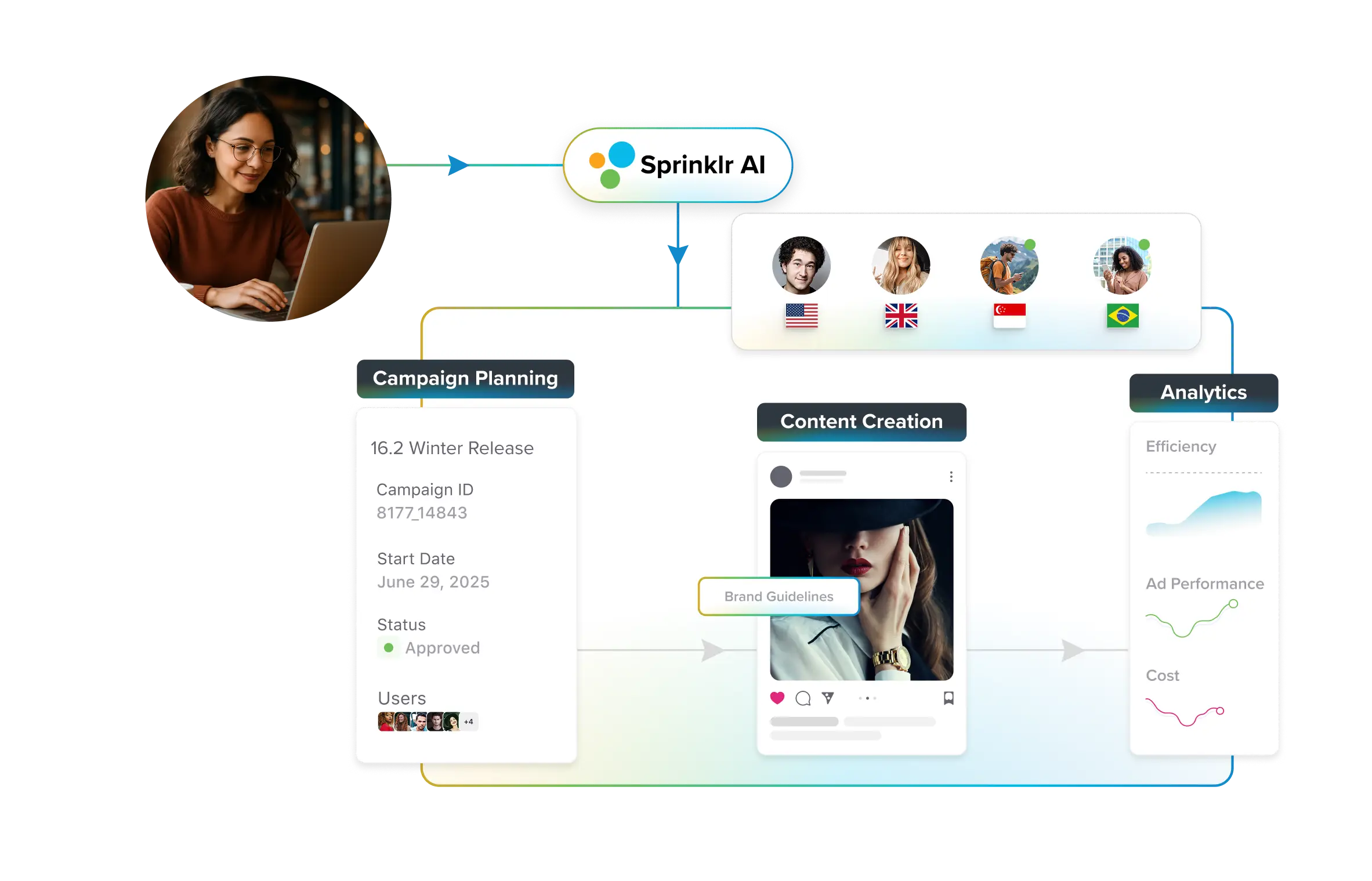
Sprinklr Marketing unifies campaign planning, content creation, publishing and analytics across global teams — all elevated by AI. Accelerate go-to-market, boost performance and enforce brand governance at scale.



Workflow Management
- What is workflow management?
- Types of workflows
- Workflow management vs. project management
- What are the key components of workflows?
- What is workflow software?
- Why is workflow management important for your brand?
- Best practices for workflow management
- Choosing the right workflow management system
- Benefits of streamlined and automated workflow management
- Why choose Sprinklr for workflow management
What is workflow management?
Workflow management is the systematic organization, control, and execution of processes within a company or organization.
It involves defining and documenting the steps involved in the process, assigning tasks to specific individuals or teams and ensuring that the process is completed efficiently and effectively.
To streamline business processes, increase productivity, reduce errors and delays and improve overall operations, organizations use workflow management systems. These systems use workflow software to automate and manage processes.
Key features of a workflow management system include the ability to:
- Document processes to provide clarity and transparency
- Assign tasks to specific individuals or teams to ensure accountability
- Set deadlines to keep projects on track
- Track progress in real-time to identify issues and roadblocks
- Report on the performance of processes to improve operations
- Flexibility to make changes to processes as needed
Types of workflows
To achieve maximum efficiency, organizations utilize both sequential and parallel processes, which can be complex to manage. Workflow management software needs to be able to support both structures to effectively replicate the brand's process.
Sequential workflows have tasks aligned in a sequence where the second task is triggered only after the first task is completed. This structure is used when the second task is dependent on the first task.
Parallel workflows have tasks aligned side by side, generating multiple tasks simultaneously for completion. This structure is used when tasks are independent of each other.
Most workflows have both sequential and parallel steps defined as a part of them.
Workflow management vs. project management
Workflow management and project management are two distinct functions that serve different purposes.
Workflow management is the backbone of efficient and effective processes in any organization. It involves organizing, controlling, and executing tasks within a company to ensure they are completed on time and to the highest standards.
Workflow software is used to automate and manage these processes, with the ultimate goal of improving efficiency and productivity. Project management, on the other hand, focuses on planning, organizing and managing resources to complete a specific project. This includes defining project scope, setting goals and objectives, establishing timelines and allocating resources. Project management requires strong leadership and organizational skills and is focused on the successful completion of a specific project.
In summary, workflow management is all about improving the efficiency of business processes, while project management is about successfully completing specific projects. By using workflow software, brands can streamline their business processes, standardize procedures, reduce errors and delays and improve overall operations.

What are the key components of workflows?
To understand and create workflows effectively, it's important to know the key components of workflows. These include:
- Workflow Canvas: a user-friendly interface that allows users to create and modify workflows using drag-and-drop functionality
- Permissioning Components: controls access to workflows, limiting changes to authorized users and preventing unauthorized changes
- Tasks: these are to-dos that are assigned to users or groups, or automatically handled by the system. Tasks are equivalent to steps in workflows
- Flow Actions: these actions allow the creation of multiple branches, the merging of multiple branches, and the generation of an approval flow based on certain properties. These are necessary for creating complex workflows with sequential and parallel defined paths
- Connecting Workflows: this functionality allows for the connection of different processes that overlap, replicating that overlap within workflows
- Reporting: users should have the ability to report on workflow operations to identify bottlenecks in processes and areas for improvement
- Milestones: these mark the beginning or end of various phases in a process, making it easy to identify bottlenecks and areas for improvement
- Visualization: built-in visualization tools, such as dashboards or content calendars{{What is a content calendar?}}, make it easy for users to view their assigned tasks and take necessary actions
- Collaboration: effective workflow management tools include built-in collaboration features to promote seamless communication among team members and efficient task completion through cooperation

What is workflow software?
Workflow software refers to tools designed to automate and optimize the completion of tasks, activities, and projects. By providing users with the ability to design, execute, and monitor the progress of workflows, workflow management software is used in various industries and for multiple purposes, including project management, content generation, creatives production, and campaign creation.
Features commonly found in workflow management software include the ability to create and customize workflows, assign tasks and responsibilities to team members, set deadlines and reminders, and track the progress of tasks and workflows. Examples of workflow management software include Sprinklr, Asana, Trello, and Jira, among others, which offer a range of features such as task management, collaboration tools, and reporting on operations.
Why is workflow management important for your brand?
Here are some reasons why you should consider implementing workflow management for your brand:
- Improved process tracking and increased productivity
Workflow management systems provide real-time monitoring of tasks, allowing you to stay on top of delays and identify areas for improvement. By evaluating team performance against SLA metrics, you can remove obstacles and increase productivity.
- Identify bottlenecks in current processes
Reporting capabilities in workflow management systems can help you identify bottlenecks in your brand's processes, leading to significant cost and resource reductions.
- Streamlined communication
Workflow management software automatically notifies the next person in the process when a task is completed, reducing the need for unstructured communication over other channels such as email or chat applications.
- Increased campaign and content production
Many organizations have experienced a significant increase in the number of campaigns and content generated by using workflow management systems. These systems provide benefits such as task management, collaboration tools and reporting on operations. In some cases, brands have seen up to a 40% increase in campaigns and 30% in content generated.
By implementing workflow management systems, brands can stay competitive in their respective industries and achieve greater success.

Best practices for workflow management
Here are some recommended best practices for managing workflows:
1. Define and document your workflows
Clearly define and document each step of your workflows, including tasks, roles and responsibilities, as well as tools and resources to be used. This will ensure that everyone involved in the workflow understands what needs to be done and how to do it.
2. Involve the right people
Involve the appropriate people in the design and execution of your workflows to ensure that the workflows are realistic and that all essential tasks and responsibilities are included.
3. Use workflow management software
Workflow management software can be an essential tool for automating and optimizing workflows. Look for a platform that offers the features and tools you need, such as task management, project planning, and collaboration tools.
4. Monitor and review your workflows
Regularly review and monitor your workflows to identify areas for improvement and make changes as needed. This will ensure that your workflows are efficient and effective and that your team is meeting its goals and objectives.
5. Communicate clearly
Effective communication is critical to successful workflow management. Ensure that team members have the necessary information to complete their tasks and that they understand how to communicate with each other and with stakeholders.
6. Keep track of progress
Use workflow management software or other tools to track the progress of your workflows. This will help you identify bottlenecks and other issues that need to be addressed and keep stakeholders informed about the project status.
7. Stay flexible
Be prepared to make changes to your workflows as needed. This may involve adding or removing tasks, adjusting deadlines, or making other changes to ensure that your workflows are efficient and effective.

Choosing the right workflow management system
With so many workflow management systems available, selecting the right one for your brand can be challenging. Consider the following key factors to ensure that you choose a system that meets your needs:
- Scalability and adaptability
Choose a workflow management tool that can adapt to your brand's evolving needs. Look for a system that can easily accommodate changes, adjustments and expansion as your organization grows.
- Collaboration features
Effective collaboration is essential for workflow management. Select a tool that includes built-in collaboration features, such as messaging or commenting, to facilitate communication and enhance teamwork.
- Measurable results
To assess workflow effectiveness and identify areas for improvement, choose a system with reporting and visualization tools that provide metrics and measures of operational performance.
- Functionality and customization
Modern workflow management tools include a range of features and automations, such as merging, splitters, decision boxes and date/time actions. Choose a system that offers the specific functionality required to replicate your brand's processes.
- Automation capabilities
Look for a system with automation features that eliminate manual and repetitive tasks, freeing up users to focus on higher-value work.
- Additional support
Choose a system that includes visualization tools, such as dashboards or calendars, that enable users to view tasks and take action accordingly.

Benefits of streamlined and automated workflow management
Workflow management can provide many benefits to organizations, including:
- Improved efficiency
Workflow management software can automate, standardize and streamline processes, which can save time and resources by reducing the need for manual tracking and reporting.
- Enhanced processes
Standardizing and optimizing processes with workflow management software can lead to more content production and campaign launches, ultimately reducing operational expenses.
- Streamlined collaboration
Workflow management software often includes collaboration tools that enable team members to communicate and work together more effectively, improving project efficiency and keeping everyone informed of progress.
- Monitored progress
Workflow management software provides tracking and monitoring tools that help organizations identify bottlenecks and areas for improvement, allowing them to stay on track and meet deadlines more effectively.
- Improved decision-making
Real-time data and insights provided by workflow management software can aid organizations in making informed decisions, especially in identifying and addressing potential issues before they become problematic.

Why choose Sprinklr for workflow management
Sprinklr offers a comprehensive workflow management solution{{Workflow Management Software}} for all Sprinklr Marketing{{Marketing and Advertising Platform}} users.
Some of the key features of Sprinklr's workflow management tools include:
- Easy-to-use user interface and intuitive workflow-building process
- Strong automation capabilities, with tasks assignable to both users and the Sprinklr system
- Ability to create and structure complex, non-linear workflows, with milestones defined for various phases of the process
- Multiple visualization tools, such as the Editorial Calendar{{Marketing Calendar Software}} and Dashboards, tied to the workflow engine for easy review and task completion
- Seamless collaboration through an inbuilt communication tool for effective team communication
- Flexibility to update, modify and redefine workflows as needed
- Gamification options, available as part of workflows if needed
Sprinklr's workflow management solution can be used for a variety of purposes, including content creation, asset/creative approvals, content approvals, campaign production, campaign approvals, PR and legal approvals, campaign requests from various teams and content/asset/creative requests from various teams.
Overall, Sprinklr's workflow management solution provides an efficient and effective way to standardize and automate workflows, saving time and resources, improving collaboration and communication and enhancing decision-making through real-time data insights.
Frequently Asked Questions
Workflows can include any defined process, such as content creation for marketing publishing or campaign creation. These processes are considered workflows when they are managed and tracked in workflow management software.
Effective workflow management can be achieved through several strategies, including defining and documenting workflows, involving the appropriate team members, using workflow management software, monitoring and reviewing workflows regularly, communicating clearly and remaining flexible.
A good workflow is one that is efficient, effective and tailored to the organization's needs. Here are some key traits of a good workflow:
- Clearly defined: a clearly defined and documented workflow helps every team member understand each step of the process
- Adaptable: allows for changes and adjustments to meet changing business needs
- Collaborative: encourages teamwork and communication among team members so that they can work together effectively and efficiently
- Scalable: can easily be expanded or modified as the organization grows or changes
- Measurable: includes metrics and measures that can be used to evaluate its effectiveness and identify areas for improvement
Workflow management can bring many benefits to your organization, such as:
- Enhanced collaboration: workflow management tools often include features for communication and collaboration, making it easier for team members to work together on tasks and projects
- Better visibility: check where tasks are in the process and get a clear overview of the status of ongoing projects
- Improved decision-making: make better decisions by providing data and metrics that allow you to analyze performance and identify areas for improvement
- Increased customer satisfaction: by improving efficiency and communication, workflow management can help you provide better customer service and ensure that your customers are satisfied{{What is customer satisfaction?}}
To get started with workflow management, you should first define and document your workflows. Once you have your workflows defined, you can choose a workflow management tool that meets your needs and goals. Finally, be sure to monitor and review your workflows regularly and make adjustments as needed to ensure that they continue to meet your needs over time.
