



The global leader in enterprise social media management
For over a decade, Sprinklr Social has helped the world’s biggest brands reimagine social media as a growth driver with a unified platform, industry-leading AI and enterprise-grade scale.



The Best Social Media Scheduling Tools for 2026
Aishwarya Suresh is an experienced content writer specializing in social media management, social listening, social analytics, Voice of the Customer (VoC) and customer experience. She writes practical, research-backed guides that help brands understand customer conversations, measure social media performance and turn insights into meaningful business decisions.
Social media scheduling tools have gone through a quiet transformation. When 91% of marketers are already using AI in their workflows, the bar for what qualifies as a good scheduling platform has moved significantly. A visual calendar and multi-platform publishing got the job done a few years ago. In 2026, teams are evaluating tools on how well the AI actually matches their brand voice, whether the platform supports newer channels like Threads and Bluesky, how it handles short-form video workflows, and whether the approval process can scale across business units without turning into a bottleneck.
And the buying decision has become harder. The market is flooded with options that look similar on a features page but behave very differently once your team is operating at volume. Some platforms are built for lean teams that need speed. Others are designed for enterprise operations managing governance, compliance, and content across regions. A few are doing genuinely smart things with AI-driven content planning and autonomous engagement. Most are still catching up.
This guide breaks down the top social media scheduling tools for 2026 with takes on what each platform actually delivers, where it hits its ceiling, and who it's built for.
What are social media scheduling tools?
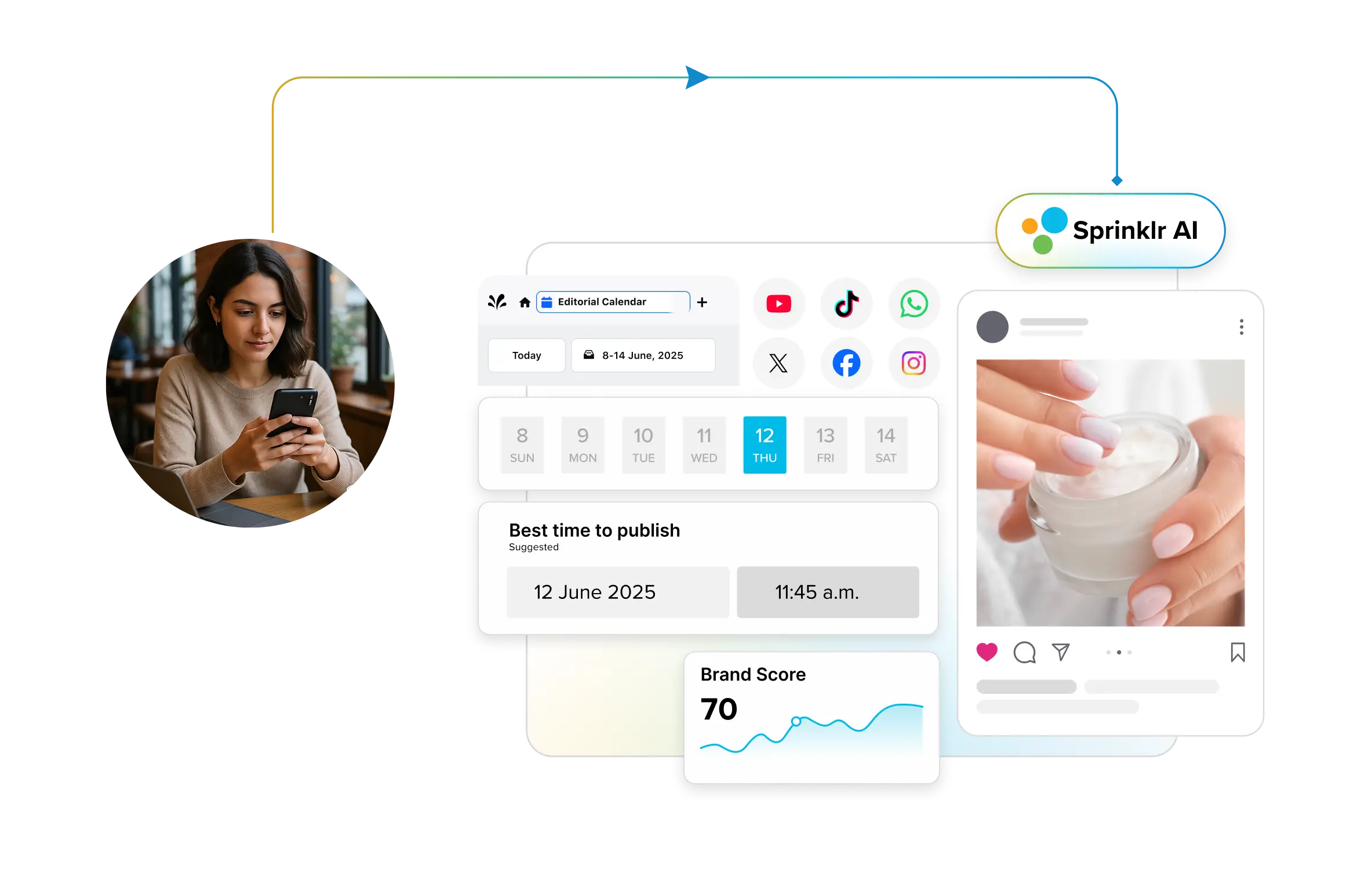
Social media scheduling tools are platforms that let you plan, create, and queue content for automatic publishing across multiple social channels from a single dashboard. Instead of logging into each platform separately and posting in real time, your team builds a content calendar in advance, sets publishing times (or lets the platform's AI optimize them), and automates content distribution across channels. This helps you stay consistent, save time, and reach your audience when they're most active.
The best ones in 2026 go well beyond basic queuing. They handle cross-platform formatting, team approvals, asset libraries, AI-assisted caption writing, and send-time optimization — all designed to keep your publishing consistent and your workflow centralized.
What is the difference between a social media scheduling tool and a social media management tool?
The two terms are often used interchangeably, but they're not the same thing. Social media scheduling is one feature inside a broader social media management platform. Here's how they differ:
Social media scheduling tool | Social media management tool | |
Primary focus | Planning, creating, and auto-publishing content across channels | Planning, creating, and auto-publishing content across channels |
Core capabilities | Content calendar, auto-publishing, basic analytics | Content calendar, auto-publishing, basic analytics + inbox management, audience listening, competitor tracking, team roles |
AI features | Caption generation, send-time optimization | Caption generation, send-time optimization + content intelligence, trend forecasting, audience insights |
Complexity & cost | Simpler interface, lower price point | More scalable, typically higher cost with tiered plans |
Best for | Teams that need consistent publishing without the operational overhead | Organizations that need to connect social activity to broader business outcomes |
Many modern platforms blur the line between scheduling and management. What starts as a scheduling tool often expands into analytics, engagement and collaboration capabilities over time. That's why several tools in this guide offer far more than publishing alone.
📖 Also Read: Social Media Management Tools Compared for 2026
Best overall social media scheduling tools
These are the platforms that cover the widest range of scheduling needs across team sizes and use cases. Whether you're an enterprise managing global publishing operations or a growing team looking for a reliable all-in-one, the tools in this category have the broadest feature sets, the deepest platform support, and the strongest track record in the market.
Sprinklr Social
Best for: Enterprise teams managing publishing, governance, and content operations across multiple brands, regions, and business units.
Sprinklr Social combines scheduling, publishing, engagement, analytics and governance across 30+ social and messaging channels in a single social media management platform.
Unlike tools built primarily for content scheduling, Sprinklr’s social media scheduler is designed for organizations managing high publishing volumes, multiple approval layers, and global social operations.
Key scheduling capabilities:
- Centralized content planning and social media content calendar
- AI-assisted publishing recommendations and content optimization for captions, hashtags and tone, with support for 100+ languages
- Multi-step social media approval workflows and governance controls
- Bulk scheduling across multiple social networks
- Region and time zone-specific scheduling
- Cross-channel campaign planning and execution
- Role-based permissions for distributed teams
- Unified inbox for managing inbound engagement alongside outbound publishing
- Built-in digital asset management (DAM) and shared asset library for content reuse across teams (Stage Entertainment reported 58% content reuse, saving $65K and 2,000+ hours)
Pricing: Custom pricing. ⬇️
Sprout Social
Best for: Growing teams that want scheduling, engagement, and analytics on one platform.
Standout scheduling features include ViralPost® (patented optimal send time technology that analyzes 16 weeks of audience data), Sprout Queue for automated evergreen publishing, and SproutLink for link-in-bio.
Hootsuite
Best for: Teams that need cross-platform scheduling with broader social listening and management features.
Key scheduling tools include OwlyWriter AI for caption and image generation, Bulk Composer for scheduling up to 350 posts via CSV upload, and best-time-to-post recommendations.
Buffer
Best for: Creators and small teams that want simple, affordable scheduling.
Notable features include AI Assistant for caption generation and content repurposing (unlimited credits on all paid plans), Start Page (built-in link-in-bio), and Smart Scheduling for optimal posting times.
Later
Best for: Visual-first teams focused on Instagram, TikTok, and Pinterest.
Signature features include Linkin.bio (a clickable landing page that mirrors your Instagram grid), Visual Planner for previewing your Instagram feed before posting, and Best Time to Post recommendations based on audience engagement patterns.
Can I schedule posts on multiple social media platforms at once?
Yes. Most social media scheduling tools in 2026 support multi-platform publishing from a single dashboard. Tools like Buffer, Hootsuite, and Sprinklr Social let you compose one post, tailor it per platform (adjusting format, character limits, and hashtags), and schedule it across Instagram, TikTok, LinkedIn, X, Facebook, Pinterest, and more simultaneously. Enterprise platforms like Sprinklr Social extend this to 30+ channels including messaging apps and review sites.
Related Read: Bulk Social Media Posting: A Guide to Multi-Channel Publishing
Social media scheduling tools for teams and agencies
When you're coordinating content across multiple team members, clients, or brands, the scheduling tool becomes a workflow tool. The platforms in this section are built for collaboration-first, like multi-layered approval chains, client-facing dashboards, shared calendars, and role-based access that keeps everyone moving without stepping on each other's work.
Planable
Best for: Approval-heavy content teams and agencies managing multiple clients.
Differentiating features include four content views (Feed, Calendar, Grid, and List), multi-level approval workflows with sequential sign-off chains (Enterprise), and native post previews that match each platform's look.
SocialPilot
Best for: Agencies and SMBs that need affordable bulk scheduling at volume.
Key features include AI Pilot for generating captions and hashtags matched to brand voice, Bulk Scheduling for up to 500 posts via CSV, and a Content Library for storing and reusing pre-approved assets.
Loomly
Best for: Collaborative teams that want structured content calendars with built-in approval workflows.
Standout features include AI-powered Post Ideas for daily content inspiration, Interaction Management for managing comments and DMs across channels from one dashboard, and AI Assistant that learns from past performance to improve recommendations over time.
CoSchedule
Best for: Marketing teams that want a unified calendar spanning social, blog, email, and campaign planning.
Notable features include ReQueue for automatically resharing your top-performing evergreen content, AI Campaign Assistant (Hire Mia) that builds entire social campaigns from a brief, and Headline Studio for optimizing post and blog headlines.
Agorapulse
Best for: Agencies and mid-size teams that need a unified inbox, social ROI tracking, and strong collaboration features.
Key differentiators include the Unified Social Inbox (treats social engagement like a ticketing system with Inbox Zero workflow), a built-in social media ROI dashboard that integrates natively with Google Analytics 4 to tie posts to actual revenue, and an AI-powered Inbox Assistant for automated spam filtering and basic response handling.
Do social media scheduling tools support approval workflows?
Many do, but the depth varies significantly. Tools like Planable and Loomly are built around multi-level approval chains where content moves through sequential sign-offs before publishing. Sprinklr Social offers enterprise-grade governance with role-based permissions, audit trails, and compliance controls across business units. Simpler tools like Buffer and Later include basic approval features but aren't designed for complex, multi-stakeholder review processes. If approvals are a core part of your workflow, prioritize platforms in the teams and agencies category.
Social media scheduling tools for creators and small businesses
Not every team needs enterprise-grade workflows. If you're a creator, a lean marketing team, or a small business managing a handful of channels, these tools deliver strong scheduling and analytics without the complexity or price tag. They're designed to help you stay consistent and data-informed without burning hours on setup or onboarding.
Metricool
Best for: Creators and small businesses that want scheduling paired with deep analytics and competitor tracking in one dashboard.
Standout features include Autolists for automating recurring content on a set weekly schedule, SmartLinks (a customizable link-in-bio page with click tracking), and built-in ad campaign analytics across Facebook Ads, Google Ads, and TikTok Ads.
Publer
Best for: Budget-conscious creators and small teams that need bulk scheduling, post recycling, and broad platform support.
Key features include Content Recycling for automatically re-queuing evergreen posts at set intervals, Auto-Schedule for optimal time posting, and Workspaces for managing multiple brands or clients separately. Supports 12+ platforms including Bluesky, Mastodon, and Telegram.
Zoho Social
Best for: Small businesses already using the Zoho ecosystem that want scheduling, CRM, and support desk connected natively.
Notable features include SmartQ for predicting optimal posting times based on audience activity, zShare browser extension for quick content curation from any webpage, and Zia AI assistant for generating real-time responses. Native integrations with Zoho CRM and Zoho Desk connect social interactions directly to leads and support tickets.
What is the best free social media scheduling tool?
Buffer is the strongest free option in 2026 — it supports up to 3 channels with 10 scheduled posts per channel, includes its AI Assistant, and has no time limit on the free plan. Publer's free tier covers 3 social accounts with 10 posts each. Metricool offers a free plan for 1 brand with 20 posts per month. For teams that only need a basic calendar, CoSchedule's Free Calendar supports 1 user with limited scheduling, and Zoho Social has a free option for teams already in the Zoho ecosystem. The right free tool depends on your channel count and posting volume, but Buffer consistently offers the most usable free experience.
Sendible
Best for: Freelancers and small agencies that need multi-client management with white-label reporting and approval workflows.
Key features include Compose Box for customizing and publishing to up to 50 profiles in one go, Smart Queues for automatically republishing evergreen content, and a Content Library for organizing reusable assets. Priority Inbox consolidates engagement across channels into one manageable stream.
Tailwind
Best for: Pinterest-focused creators and e-commerce brands that rely on visual content and smart pin scheduling.
Signature features include SmartSchedule for posting at optimal engagement times for your specific audience, SmartLoop for automatically recycling top-performing pins, Tailwind Create for generating dozens of branded pin designs in one click, and Tailwind Communities for expanding reach through niche content-sharing groups.
⚠️ Important Note for Readers:
While this list isn't exhaustive, our team invested significant time in research to curate tools making waves in 2026 — independent picks by Sprinklr’s editorial team, drawn from publicly available review sites and in no particular order of ranking or popularity. These insights empower you to select the software that best fits your social media needs. It is crucial to note that software or platforms may evolve over time, and the company may address some of these concerns in newer updates or versions.
Which social media scheduling tool is the right fit for your needs?
Picking a scheduling tool isn't really a feature decision; it's a workflow decision. The right tool depends on how many accounts you manage, whether other people are involved in approvals, which platforms matter most to your audience, and how much reporting you need. In 2026, AI-assisted scheduling and short-form video support have become baseline expectations, so the real differentiators are team size, budget, and how tightly your social activity needs to connect to broader marketing goals.
Here's a quick way to think about it:
If you need… | You're looking for… | Best Picks |
A single platform to manage cross-platform scheduling with team collaboration, post approvals, and performance reporting in one place | All-in-one scheduler | Sprinklr Social, Hootsuite |
Client-facing workflows with white-label dashboards, approval links, and multi-brand account management | Agency tool | Planable, Agora Pulse, Sendible |
Scheduling built around Instagram and Pinterest with visual feed planning and evergreen content automation | Visual content tool | Later, Tailwind, Buffer |
Scheduling + deep analytics, competitor tracking, and ad performance — all from one dashboard | Analytics-first tool | Metricool, Sprinklr Social, Sprout Social |
Social scheduling natively connected to a CRM or broader marketing stack without extra integrations | Ecosystem-integrated tool | Zoho Social, HubSpot, Sprinklr Social |
Budget-friendly bulk scheduling with content recycling and automation features that scale with a growing account | Affordable automation tool | SocialPilot, Publer, Buffer |
Scheduling with a unified content calendar across social, blog, email, and campaign timelines in one view | Content ops tool | CoSchedule, Loomly |
Quick Tip: If your biggest challenge is getting content out consistently, start with the creator and SMB tools. If your challenge is coordinating content across people, brands, or markets, look at the team and enterprise platforms. The tool should match the complexity of your operation, not the other way around.
Are AI social media scheduling tools worth it?
In 2026, yes — but with a caveat. AI features like send-time optimization, caption generation, and content recycling are now standard across most platforms and genuinely reduce manual effort. Where the value gap widens is in brand voice matching and content intelligence. Enterprise tools like Sprinklr Social use AI to learn your brand's tone across languages and regions, which is a meaningful operational advantage at scale. For smaller teams, Buffer's AI Assistant and Metricool's Autolists deliver solid time savings without the complexity. The real question isn't whether AI is worth it — it's whether the AI on your chosen platform actually understands your brand or just generates generic output.
Final thoughts
The scheduling tool you pick in 2026 carries more weight than it used to. With AI reshaping how content gets created, channels multiplying, and audiences expecting consistency across every platform, the gap between the right tool and the wrong one shows up fast — in missed publishing windows, messy approval chains, and analytics that don't connect back to anything meaningful.
The good news: the market has matured. Whether you're a two-person team posting across five channels or an enterprise managing hundreds of accounts across regions, there's a platform on this list built for the way you actually work. The key is matching the tool to the complexity of your operation, not overshooting on features you won't use, and not undercutting yourself with a platform you'll outgrow in six months.
For teams operating at an enterprise scale, managing multi-brand publishing, governance, regional workflows, and AI-driven content optimization from one place, Sprinklr Social is built for exactly that level of coordination. If that sounds like your reality, book a demo and see how it fits.
Aishwarya Suresh is an experienced content writer specializing in social media management, social listening, social analytics, Voice of the Customer (VoC) and customer experience. She writes practical, research-backed guides that help brands understand customer conversations, measure social media performance and turn insights into meaningful business decisions.